

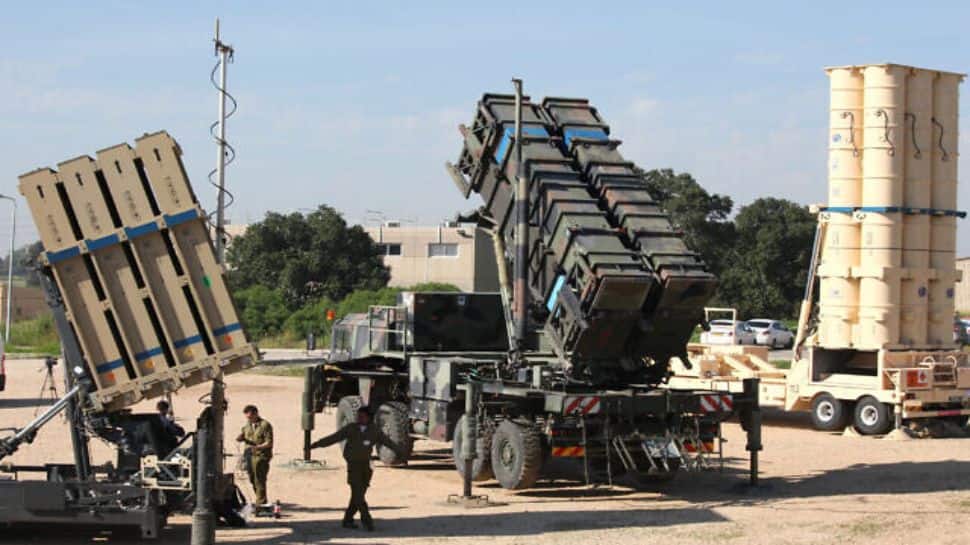
In a move that redefines historical narratives, Israel and Germany have finalized a significant defence cooperation agreement worth 2 billion euros. This pact involves Germany’s procurement of advanced Israeli weaponry, including Spike anti-tank missiles, drones, and air-defence systems, marking a profound shift 80 years after the Holocaust. Israeli representatives have noted this as a moment that “turns history on its head,” signifying a new era of mutual reliance.
German Chancellor Friedrich Merz’s recent remarks at the G7 summit, where he characterized Israel as undertaking “the dirty work for all of us” in regional conflicts, exemplify the unprecedented level of trust and strategic alignment between the two nations. This statement starkly contrasts with historical animosities and positions Israel as a vital security partner for Germany.
Germany is embarking on a substantial upgrade of its military capabilities, aiming to create the strongest armed forces in Europe. Responding to years of criticism regarding underinvestment, the German government has initiated reforms to significantly boost defence spending. Key initiatives include plans for a lottery-based recruitment system and the acquisition of a vast range of military hardware valued at 37.7 billion euros. A critical component of this military expansion will be the integration of cutting-edge Israeli defence technologies.
Leaked documents reveal the extent of Germany’s commitment, with substantial funds allocated for Israeli drones from Elbit (700 million euros) and ammunition for Heron drones (100 million euros). The 2 billion euro deal for Spike anti-tank missiles is considered a landmark achievement for Israel’s defence export sector in Europe. Moreover, intelligence cooperation has been evident, with Israel’s Mossad agency contributing to recent arrests in Berlin.
This burgeoning military alliance is further bolstered by Germany’s earlier acquisition of the Arrow-3 missile defence system from Israel in 2023, a 4 billion euro investment designed to provide defence against intercontinental ballistic missiles. Officials from Israel’s Ministry of Defence have highlighted the extraordinary nature of this relationship, where Israeli technology now plays a role in securing German forces.
Major General Amir Baram articulated Israel’s pride in this new partnership: “Germany’s trust in our capabilities sends a message of leaving historical pain behind. We are proud that our systems are now part of Germany’s new army.” Chancellor Merz, whose family history intersects with the Nazi era, has displayed a sensitive understanding of this past, recently experiencing a poignant moment at the reconsecration of a Munich synagogue that had been destroyed by the Nazis.
However, Merz’s pro-Israel policies have not been without controversy within Germany. Concerns have been raised regarding Israel’s actions in Gaza, leading to a temporary suspension of German arms shipments. Merz has acknowledged the difficult realities of the escalating humanitarian crisis. The Israeli ambassador to Germany has conveyed that critical feedback from German allies is received with careful consideration.