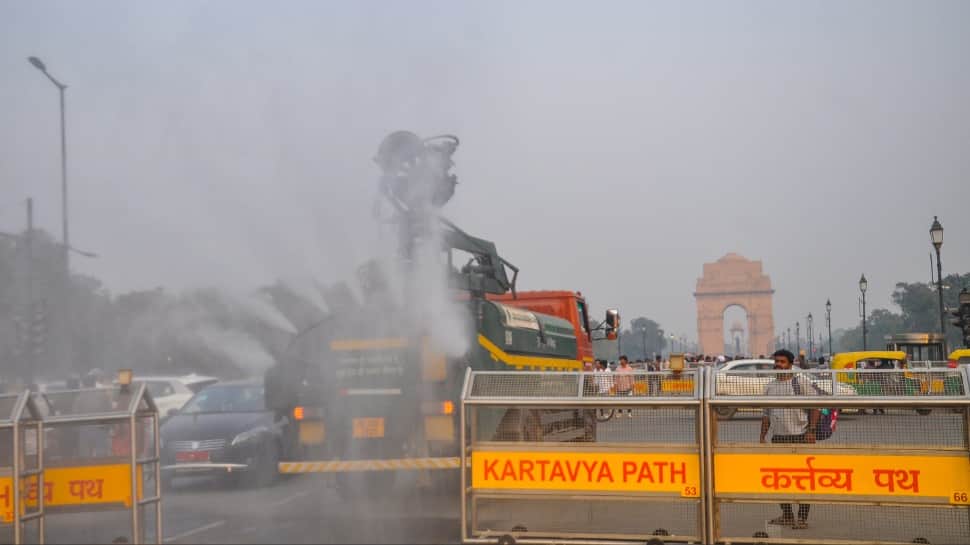

A severe health alert has been issued for Delhi as the city choked under a dense smog blanket on Saturday morning, with the Air Quality Index (AQI) soaring into ‘Severe’ levels across many districts. This alarming situation persists even with the implementation of Stage III of the Graded Response Action Plan (GRAP), underscoring the severity of the pollution challenge. At 10 am, Delhi’s average AQI was recorded at 389, precariously close to the 401 mark that defines severe air quality. The impact on public health is immediate and widespread. The locality of Wazirpur recorded the highest AQI at a staggering 450, followed by other highly polluted areas like Bawana (443), Rohini (426), Anand Vihar (426), and Mundka (425). Jahangirpuri, Vivek Vihar, Chandani Chowk, Narela, and ITO also registered AQI levels exceeding 400, falling into the ‘Severe’ category. This sustained high pollution is a result of multiple factors, including vehicular emissions (19.8%) and stubble burning (8.5%), as indicated by recent data. The Supreme Court’s directive to Punjab and Haryana to report on stubble burning measures highlights the transboundary nature of this crisis. Unfavorable meteorological conditions, such as slow winds and low temperatures, are trapping pollutants, leading to a buildup of toxic air. Predictions of further decreases in wind speed suggest that the prevailing poor air quality may continue.