

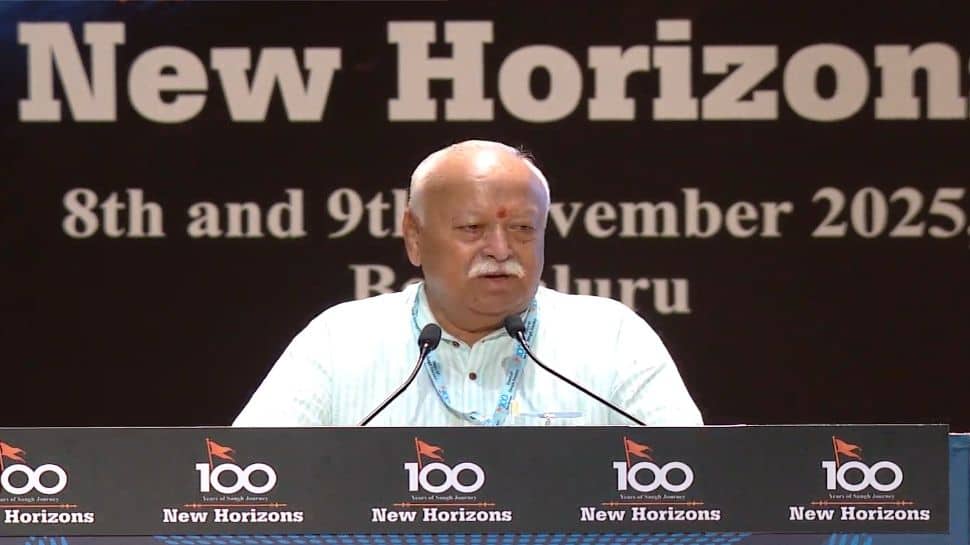
In a recent address in Bengaluru, RSS chief Mohan Bhagwat clarified the Rashtriya Swayamsevak Sangh’s position on religious inclusivity, stating that individuals of any faith, including Muslims and Christians, are welcome to participate. The key criterion, Bhagwat explained, is their identification as ‘children of Bharat Mata’ and as part of the larger Hindu society, emphasizing unity over religious dogma.
Bhagwat’s initial remarks, suggesting that ‘only Hindus are allowed,’ were followed by a crucial clarification. He elaborated that while the Sangh is rooted in Hindu society, people of different denominations can attend its gatherings (‘Shakhas’) provided they do not emphasize their religious differences. He highlighted that the organization welcomes everyone, focusing on a shared national identity and purpose, rather than scrutinizing individual religious beliefs or backgrounds.
The RSS chief also addressed historical narratives surrounding the organization’s legal and constitutional status. He explained that the Sangh’s non-registration during the British colonial era was a practical necessity and that its repeated bans, followed by court rulings, affirmed its legitimacy. Bhagwat asserted that the RSS operates within the framework of the Indian Constitution and does not need formal registration, akin to the un-registered status of the Hindu religion itself.
Bhagwat outlined the Sangh’s core mission: to foster a unified and empowered Hindu society that will contribute to a strong and prosperous India. This ideal India, he envisions, will then share its wisdom of ‘dharma’ with the world. He explicitly stated the Sangh’s unwavering respect for the Indian national flag, the ‘Tiranga Dhwaj,’ confirming its supreme importance.
In essence, Bhagwat positioned the Sangh’s unity not as an exclusive membership but as a collective dedication to the nation, recognizing all who call India their motherland as part of a single, vast family, bound by shared values and aspirations.