

A major technical failure at Delhi Airport, responsible for delays and cancellations affecting 46 flights, has brought to light prior concerns from air traffic controllers. Back in July, the Air Traffic Controllers’ Guild of India had formally notified authorities about noticeable ‘performance degradation’ in the nation’s air traffic automation infrastructure. They specifically pointed out recurring slowdowns and data processing delays impacting critical airports such as Delhi and Mumbai.
The Guild had urged that India’s air traffic management systems be brought up to par with global leaders like Eurocontrol and the FAA. Their recommendation emphasized integrating advanced predictive tools, leveraging AI for conflict detection, and enabling real-time data synchronization.
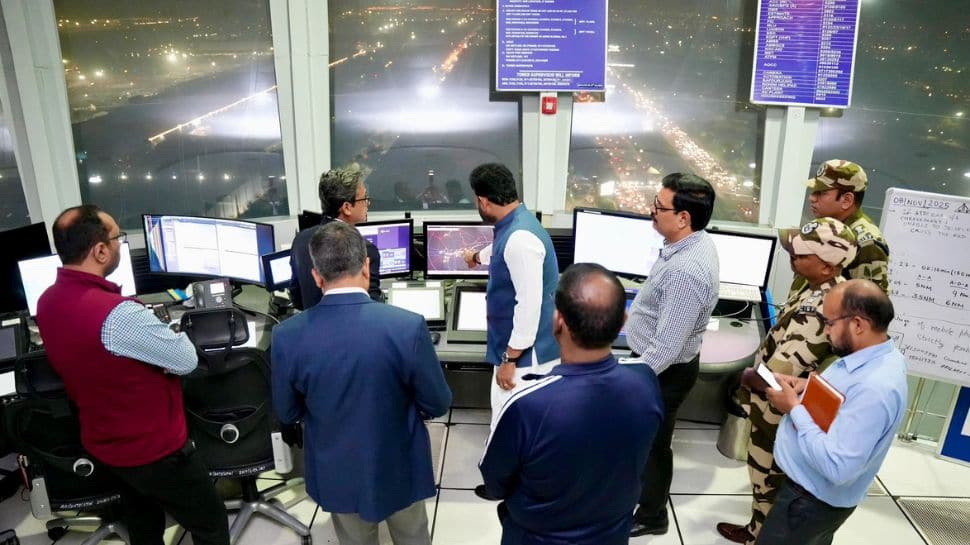
In the wake of the incident, the Union Minister of Civil Aviation conducted an on-site inspection of the Delhi ATC Tower. The minister directed a thorough root-cause investigation and the implementation of enhanced system redundancy to fortify the ATC network against future disruptions. Teams from AAI, ANS, and ECIL worked round-the-clock to resolve the problem, ensuring passenger safety was paramount by utilizing manual coordination while systems were being restored.