

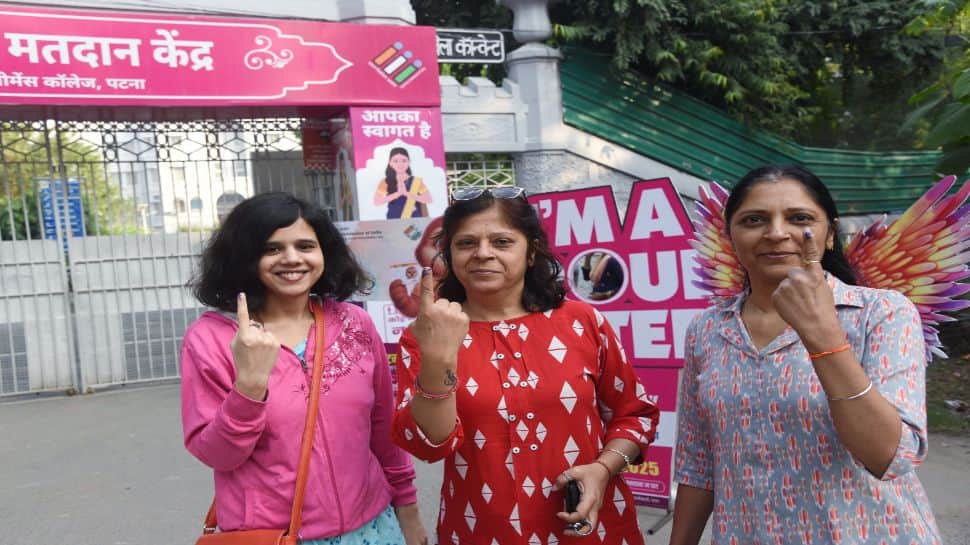
Bihar’s political arena is witnessing a seismic shift, driven by a record 64.46% voter turnout in the first phase of the assembly elections. This surge across 121 seats is a notable jump from the 55.68% recorded in the initial phase of the 2020 elections, creating a dynamic environment that could challenge Nitish Kumar’s established two-decade rule.
Historical analysis of Bihar’s 17 assembly elections since India’s independence reveals that voter turnout fluctuations of over five percent frequently coincide with changes in government. The current election’s high participation suggests a potential reordering of political power and influence within the state.
Past elections provide a clear precedent. The 1967 elections saw a 7% increase in turnout leading to a new government. A 6.8% rise in 1980 saw the Congress return. The 1990 elections, with a 5.8% increase, ended Congress’s rule and initiated the Janata Dal era. Notably, the 2005 elections experienced a sharp 16.1% decrease in turnout, which coincided with Nitish Kumar’s rise to power, marking the beginning of his long tenure.
Current political analyses highlight three potential outcomes: a strengthened Nitish Kumar, the rise of Prashant Kishor’s Jan Suraj party as a significant new entity, or internal challenges for Tejashwi Yadav if the opposition coalition underperforms. Factors contributing to the elevated turnout include significant electoral promises, particularly for women, the mobilization of marginalized communities, and favorable post-festival timing. The results of the subsequent voting phases will be instrumental in determining the future direction of Bihar’s governance.