

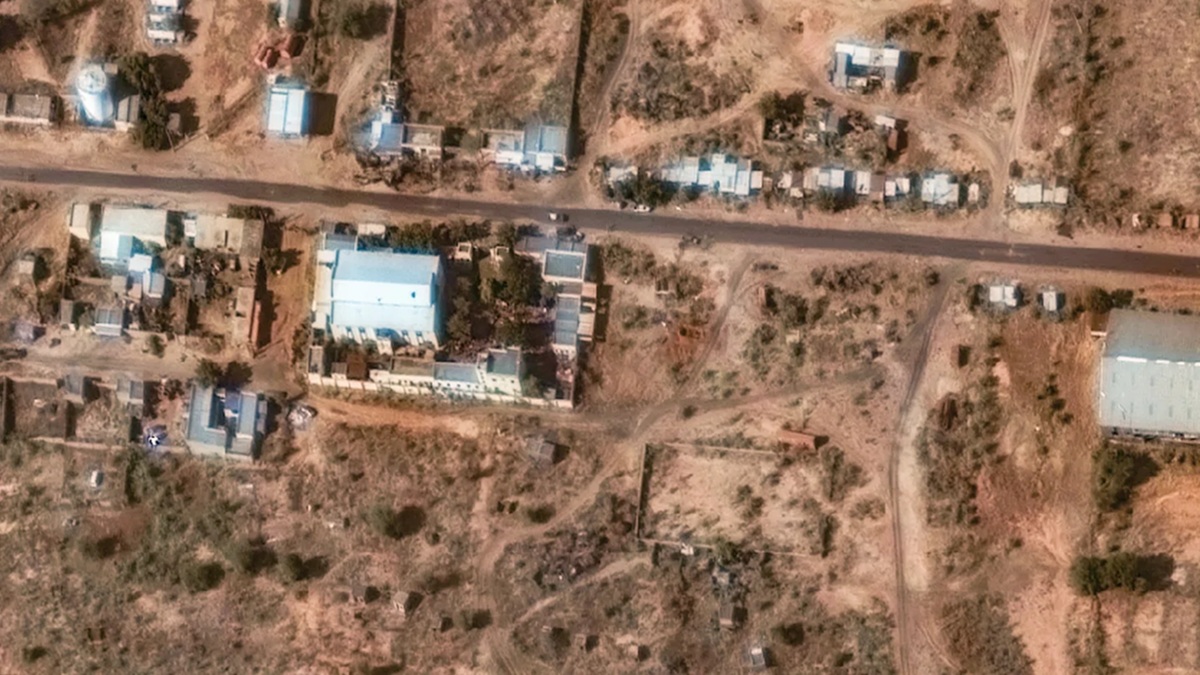
Newly analyzed satellite imagery provides stark evidence of potential mass burial sites in Sudan’s el-Fasher following its capture by the Rapid Support Forces (RSF). Researchers at Yale School of Public Health’s Humanitarian Research Lab, using Vantor imaging, have identified two significant areas exhibiting characteristics of mass graves. One is located near a mosque north of the Saudi hospital, and the other is by a former children’s hospital, reportedly converted into an RSF holding facility. The researchers have issued a warning that the actual number of fatalities is likely higher than can be determined, as multiple bodies may have been buried in single pits. The Associated Press independently reviewed the imagery and confirmed the presence of disturbed soil at both sites, consistent with large-scale burial activities.
Earlier satellite views, taken shortly after the RSF’s advance, displayed white shapes, presumed to be corpses, scattered near the Saudi and children’s hospitals, alongside visible blood patterns. Accounts from witnesses, online footage, and field reports corroborate widespread killings after the city’s fall. The RSF has denied responsibility for the deaths at the hospital. However, their own circulated videos from the area, while showing recognizable landmarks, carefully avoid depicting fighters among bodies or carrying out executions.
Additional satellite imagery from Planet Labs in late October showed similar white shapes near a northern berm outside el-Fasher, along with burned vehicles. The Yale lab’s findings suggest that many of these bodies were later moved, potentially as an attempt to conceal evidence. The communications blackout and ongoing instability in el-Fasher make it exceptionally challenging to establish a precise casualty count. Dr. Adam Ibrahim Ismail, a local physician, is confirmed among the victims, reportedly detained and killed by RSF fighters. The Sudan Doctors’ Network has condemned his death as a deliberate targeting of medical personnel. UN Secretary-General António Guterres has demanded accountability, describing the reported atrocities as ‘horrendous.’ With burials continuing in RSF-controlled areas, investigators may encounter insurmountable difficulties in obtaining direct evidence of war crimes.
The violence in el-Fasher is part of a broader surge in conflict, including a drone strike in el-Obeid, North Kordofan, that killed at least 40 people, an attack local sources attribute to the RSF’s increasing use of drones. The UN’s humanitarian office has confirmed extensive casualties but has not assigned blame. Both Kordofan and Darfur have become central to Sudan’s civil war, which began in April 2023 between the RSF and the Sudanese Armed Forces. The conflict has claimed over 40,000 lives according to UN estimates, though independent aid organizations believe the actual number is substantially higher. The war is driving a devastating humanitarian crisis, displacing over 14 million Sudanese citizens and leading to widespread famine and disease, with two regions facing imminent starvation.