

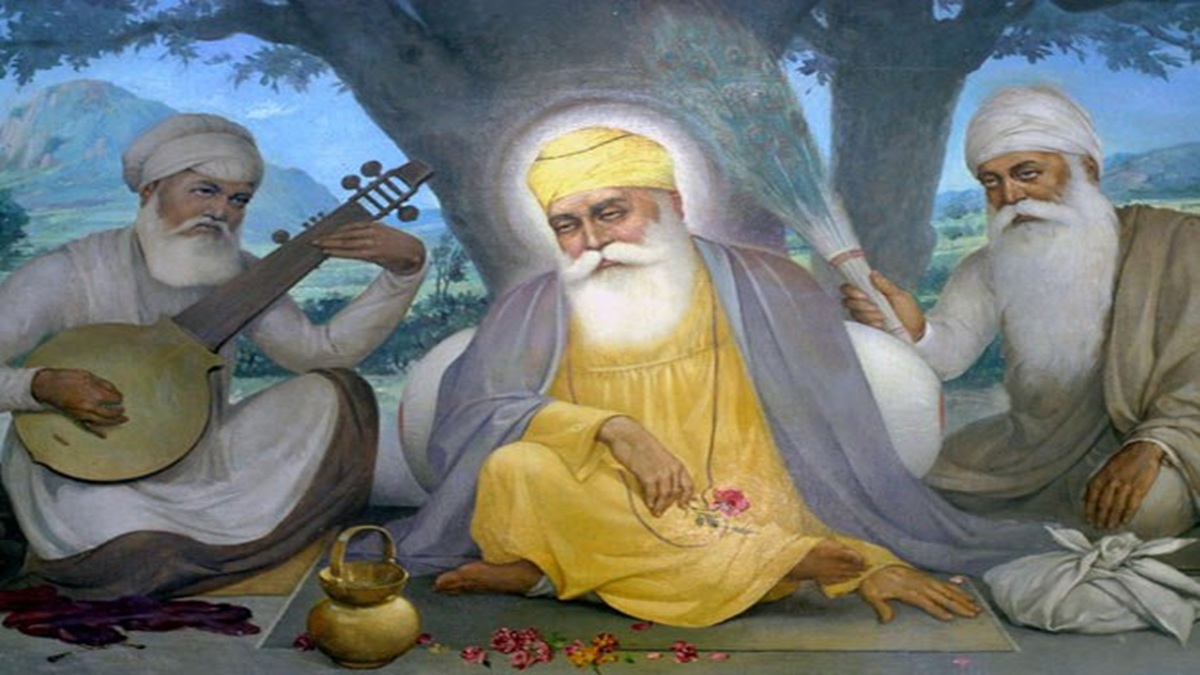
Beginning around 1500 CE, Guru Nanak embarked on a series of extensive spiritual pilgrimages known as ‘Udasis,’ motivated by a profound vision to share divine love and truth, moving beyond the confines of rituals and dogma. Traveling on foot for thousands of miles with his constant companion Bhai Mardana, Guru Nanak traversed the subcontinent and beyond, overcoming religious, linguistic, and cultural divides.
These remarkable journeys are historically divided into four major expeditions. The first Udasi saw Guru Nanak travel eastward from Punjab, visiting sacred sites like Ayodhya and Varanasi, and extending his journey through Bengal, Assam, and into Nepal. His time in Varanasi was marked by discussions that challenged ritualistic traditions and emphasized the importance of compassion.
The second Udasi journeyed south to areas including Sri Lanka and Kanchipuram. Here, Guru Nanak interacted with local religious figures and addressed prevalent superstitions, advocating for a more enlightened spiritual path.
His third Udasi took him north and into Central Asia, covering regions such as Kashmir, Tibet, and Tashkent. During this expedition, he engaged in dialogue with yogis, Buddhist monks, and other spiritual leaders, promoting principles of justice and the unity of all existence.
The fourth and most geographically extensive Udasi led him westward, reaching as far as Arabia, including the holy cities of Mecca and Medina, and continuing to Baghdad, Jerusalem, and Afghanistan. These travels were characterized by his efforts to confront prejudice and champion tolerance and universal brotherhood.
A cornerstone of Guru Nanak’s Udasis was his deep engagement in interfaith dialogue. He actively conversed with Hindu pandits, Buddhist monks, Sufi mystics, and Islamic scholars, promoting an inclusive, non-sectarian spirituality that challenged the caste system, gender discrimination, and empty ritualism. His simple humility and profound wisdom attracted followers from all walks of life and religious traditions.
After approximately two decades of continuous travel and covering vast distances, Guru Nanak returned to establish himself in Kartarpur. This settlement became a vital center for spiritual seekers and a cornerstone in the development of the Sikh faith. The numerous gurdwaras, the rich oral traditions, and the spiritual teachings associated with the regions he visited stand as enduring evidence of his transformative influence on South Asian spirituality and society.
In essence, Guru Nanak’s Udasis were not merely long journeys; they were a profound spiritual revolution. By traversing boundaries and questioning established dogmas, Guru Nanak redrew the spiritual map of South Asia and inspired generations with a powerful new understanding of unity, compassion, and social justice.