

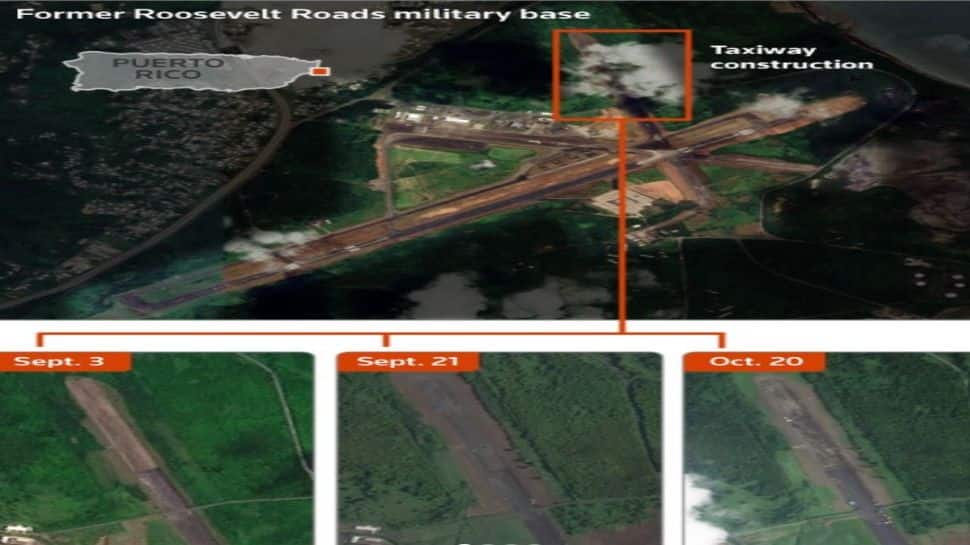
The strategic Roosevelt Roads Naval Base in Puerto Rico, inactive for two decades, is undergoing rapid modernization, sparking significant speculation about potential U.S. actions concerning Venezuela. Satellite imagery confirms extensive work on runways and access routes at the base, situated roughly 800 kilometers from the Venezuelan coast.
Originally a crucial Cold War military installation, the base was decommissioned in 2004. Its sudden reactivation is being interpreted by many as a clear signal of escalating U.S. pressure on Venezuelan President Nicolás Maduro’s administration, moving beyond previous diplomatic and economic sanctions.
Concurrently, civilian airports in Puerto Rico and neighboring St. Croix are also seeing significant infrastructure upgrades, including runway extensions and improvements to fuel and logistics facilities. These sites could easily transition to support roles in a military operation, given their proximity to Venezuela, allowing for rapid aerial deployments.
Sources close to the U.S. defense apparatus and naval analysis suggest that these infrastructure projects are designed to communicate a strong message to Maduro: to step down or face the possibility of military action. The U.S. has long criticized Maduro’s government for its alleged authoritarian practices and democratic shortcomings.
Reports from Caracas indicate growing unease within President Maduro’s government, with sources suggesting he has reached out to Russia and China for support, fearing an impending U.S. armed strike. This apprehension was underscored by the recent landing of a Russian IL-76 cargo plane, reportedly operated by a firm linked to the Wagner Group, in Venezuela. While the cargo’s contents are unknown, its arrival signals continued Russian solidarity with Venezuela.
President Maduro has publicly accused the United States of attempting to destabilize his nation and seize control of its vast oil wealth. Venezuela’s economy is in crisis, despite its status as a global leader in crude oil reserves, and U.S. pressure is exacerbating these challenges.
The geopolitical climate in South America is intensifying. The U.S. maintains its objective is to support democracy, but global analysts widely believe strategic interests in Venezuela’s oil and regional influence are key drivers. Russia and China are solidifying their partnerships with Maduro’s government, seeing it as an opportunity to challenge U.S. regional dominance.
The United Nations has expressed concerns over the volatile situation, warning that missteps could ignite a broader regional conflict, especially considering Venezuela’s ongoing border disputes. The resurgence of activity at the Puerto Rican base highlights the enduring nature of global rivalries and the potential for significant geopolitical shifts.