

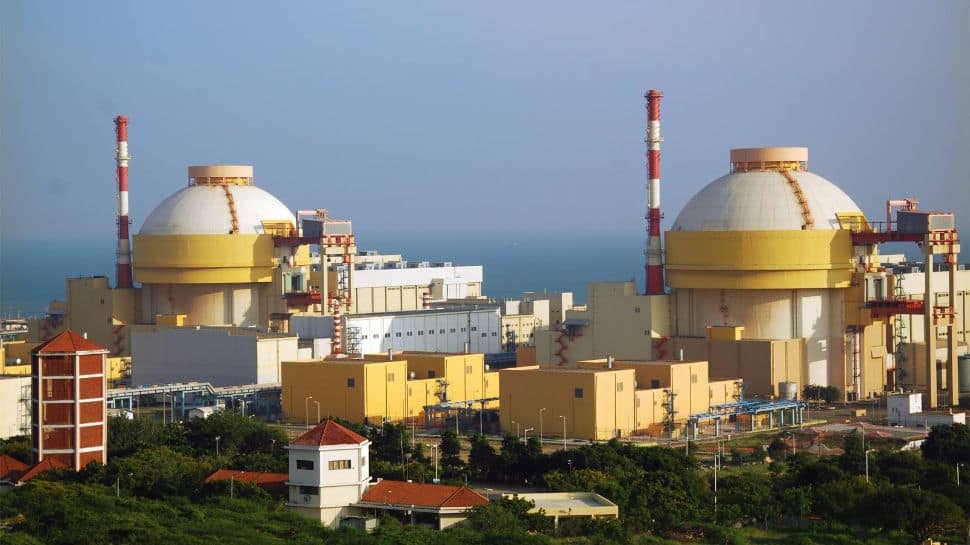
India has achieved a significant technological feat in nuclear energy with the initiation of fuel loading at its 500-megawatt fast-breeder reactor prototype in Kalpakkam, Tamil Nadu. This state-of-the-art facility is expected to commence electricity generation by April 2026. This development marks India as the second country globally, following Russia, to advance fast-breeder reactor technology to the prototype stage, leaving China, which is currently at the experimental level with similar designs, behind.
Fast-breeder reactors are distinguished by their ability to produce more fissile material than they consume. This is accomplished by eliminating the neutron-slowing process found in conventional reactors, allowing for the direct conversion of abundant uranium-238 into usable nuclear fuel within the reactor itself. Indian scientists have dedicated twenty years to developing this advanced capability, employing specialized equipment and leveraging international collaborations, particularly receiving key techniques from Russia that were not otherwise accessible.
This milestone is a crucial step in realizing the ambitious three-stage nuclear program envisioned by eminent physicist Homi Jehangir Bhabha soon after India’s independence. The program’s stages included initial learning, developing indigenous fuel cycles and reactor designs, and finally achieving complete self-reliance. The Kalpakkam fast-breeder reactor represents substantial progress in the second stage of this strategic roadmap.
While the successful conversion of uranium-238 is a major advancement, India still depends on external sources for some fuel needs, indicating that full energy independence will require continued efforts. The nation’s long-term energy security strategy centers on harnessing its vast thorium reserves, which are globally significant and found in monazite sands along the coasts of Kerala and Odisha. Thorium offers a promising path to sustained fuel availability if its conversion into fissile material can be scaled up efficiently in reactors.
Laboratory research has confirmed thorium’s potential to be converted into nuclear fuel, though this process has not yet been demonstrated in a commercial-sized reactor. China is pursuing an alternative approach with its liquid-fluoride thorium reactor experiments, which recently garnered international attention for their innovative fuel handling system demonstrated in an experimental unit. China plans a 10-megawatt follow-up reactor.
The Kalpakkam fast-breeder prototype firmly establishes India as a leader in advanced nuclear fuel cycle technologies. The upcoming decade is expected to be critical for the development of both thorium and fast-breeder technologies, showcasing how laboratory achievements can be transformed into reliable, large-scale power generation and sustainable energy solutions for the future.