

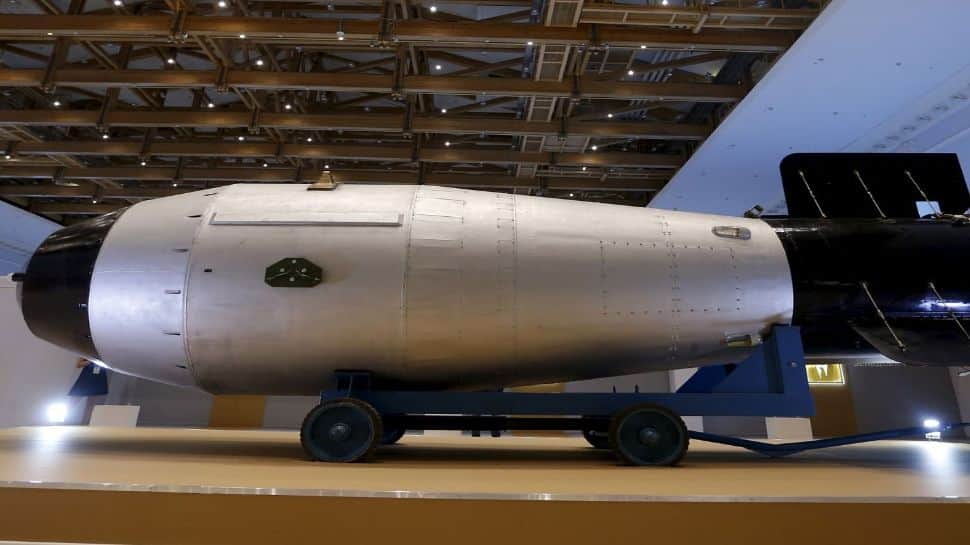
The United States has signaled a significant shift in its nuclear policy by announcing plans to resume nuclear testing, ending a 33-year pause. This decision comes amidst growing concerns over the expanding nuclear capabilities of Russia and China, with President Trump asserting the need to match or surpass rivals. U.S. officials specifically cited recent long-range nuclear system tests by Russia and China’s increasing arsenal as justification for this policy change, emphasizing America’s leading position in nuclear weapons stockpiles. The last U.S. underground test took place in 1992, concluding a long period of arms control efforts. This reversal is viewed as a strategic imperative to maintain an edge in a rapidly evolving international security environment.
In India, this development is prompting serious deliberation within strategic circles. Experts suggest that India may now consider conducting a thermonuclear test to strengthen its deterrent capabilities, particularly against China. Recalling the partial success of India’s 1998 thermonuclear tests, analysts believe that a rise in regional tensions could compel New Delhi to demonstrate its advanced technological prowess. The historical context of international testing bans highlights their limited success, as India and Pakistan proceeded with their nuclear tests in 1998. As the global security dynamics change, Western countries are expected to pay closer attention to India’s security needs and its efforts to enhance its deterrence.
Discussions within India are revisiting past arguments made by scientists who advocated for retaining the nuclear testing option. Many strategists believe a robust thermonuclear capability is a crucial component of effective regional deterrence. While some voices caution against the potential for increased tensions with Pakistan and the risk of a new global arms race, others argue that such a capability is a strategic necessity. The current global nuclear count stands at nine states possessing around 13,000 warheads, significantly fewer than during the Cold War. The U.S. and Russia possess the majority of deployed warheads, China’s arsenal is expanding rapidly, and India and Pakistan maintain arsenals in the low hundreds. The U.S. policy shift is reigniting a critical debate on nuclear deterrence and strategic stability, with significant implications for Asian security.