

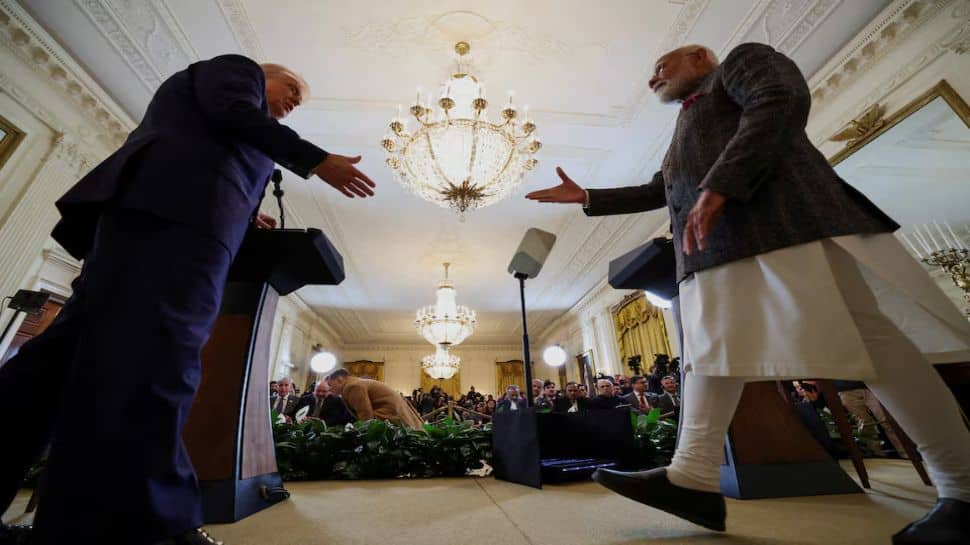
A dedicated team is actively working to forge a comprehensive trade deal between India and the United States, aiming to unravel the intricate web of tariffs that have complicated bilateral commerce. The latest development sees a senior Indian delegation embarking on a crucial visit to America this week to advance negotiations that have been underway since February. This visit is a significant milestone in the ongoing efforts to boost trade volumes and dismantle tariff barriers. The momentum has been building following a recent conversation between Prime Minister Narendra Modi and US President Donald Trump, who have jointly encouraged their teams to finalize the first phase of a deal by the fall of 2025.
Indications from officials close to the talks suggest that the five rounds of discussions completed thus far have been highly productive, with progress moving in the desired direction towards a potential breakthrough. The primary focus now is on determining the timeline for the formalization of this agreement. This strategic push for a trade deal is occurring within a broader context of shifting global economic alliances, with the US actively seeking to strengthen its partnership with India. US Treasury Secretary Scott Baesant’s strong stance against China’s export restrictions on rare earth materials highlights the geopolitical undercurrents influencing international trade policies.
High-level dialogues, including Commerce and Industry Minister Piyush Goyal’s recent trade consultations in New York, have reinforced the commitment to securing a mutually advantageous trade arrangement. During these meetings, discussions were held with key US trade representatives regarding the proposed framework. The current tariff situation, where US levies on Indian goods can reach up to 50%, underscores the importance and potential impact of a bilateral trade agreement in mitigating these obstacles.
The ultimate objective of this trade accord is ambitious: to propel bilateral trade from its current $191 billion to over $500 billion by 2030. The United States has consistently been India’s largest trading partner, a testament to the strong economic relationship. This proposed agreement is therefore a cornerstone of India’s external trade strategy, designed to simplify trade processes, drive economic growth, and contribute to job creation across both nations.