

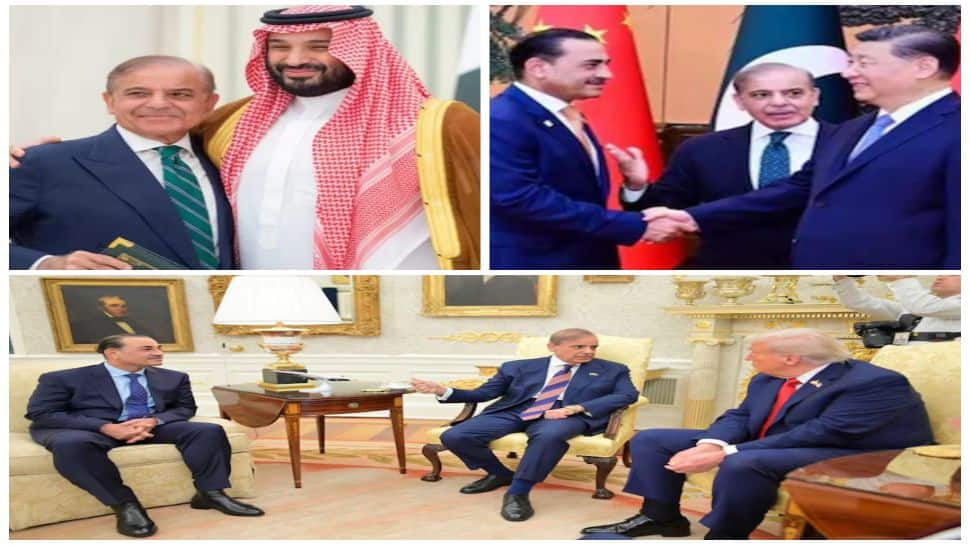
Pakistan’s current foreign policy is characterized by a sophisticated strategy of engaging with both the United States and China, two global powers with competing interests. This coordinated approach by Pakistan’s civilian and military leadership has attracted significant international attention. The country has recently secured substantial new Chinese investments while simultaneously offering the US a significant port development opportunity in Balochistan. Adding another dimension to this strategy, Saudi Arabia has cemented its role through a new defense agreement.
Observers highlight Pakistan’s unique diplomatic model, which allows it to maintain positive relationships with two rival superpowers. The nation provides economic benefits to the US without compromising its strong ties with China, and offers similar assurances to Beijing. This strategy aims to spread Pakistan’s influence across all major global players in a rapidly evolving multipolar world.
Prime Minister Shehbaz Sharif’s recent visit to China led to the announcement of $8.5 billion in new Chinese investments. This successful negotiation demonstrates Pakistan’s ability to leverage its engagement with the US while simultaneously expanding its partnerships with China. The nation’s deepening relationship with Saudi Arabia has also been managed without alienating the United States, as evidenced by several recent meetings between President Donald Trump and Pakistan’s military chief, General Asim Munir.
Within Pakistan, power often resides with General Asim Munir, with the civilian government reportedly following military guidance. This structure, described as a ‘hybrid government,’ enables Islamabad to pursue a foreign policy focused on satisfying the interests of major global powers, including China and Saudi Arabia.
A key element of this balancing act involves offering the US the chance to develop a port near Pasni, a coastal town in Balochistan located approximately 110 kilometers from the Chinese-operated Gwadar port. This strategic move could facilitate access to Pakistan’s abundant mineral resources and create a parallel route, diversifying Pakistan’s economic and strategic access points beyond those controlled by China.
Financial transactions are central to Pakistan’s strategic plan for development. A $500 million deal has been signed for mineral development with a US company. Furthermore, the Asian Development Bank and the International Finance Corporation are investing significantly in the Reko Diq mine, which holds one of the world’s largest reserves of copper and gold.
However, the development of resources in Balochistan presents considerable challenges. The region has a history of resisting Islamabad’s authority, and local populations may oppose both Chinese and US initiatives. This sentiment is further complicated by the designation of certain Baloch groups as terrorist organizations.
Pakistan’s pursuit of economic expansion has led to a complex situation where its sovereignty is tested. The country relies on the IMF for financial assistance, engages in nuclear energy cooperation with Saudi Arabia, secures infrastructure financing from China, and offers mineral access to the United States. This intricate network of dependencies requires careful management.
Prime Minister Sharif and General Munir are seen as adept at strategically utilizing the nation’s resources to balance international investment and influence against internal constraints. This complex diplomatic effort underscores Pakistan’s aspiration to navigate the complexities of a multipolar world while simultaneously pursuing economic growth and strategic security.