

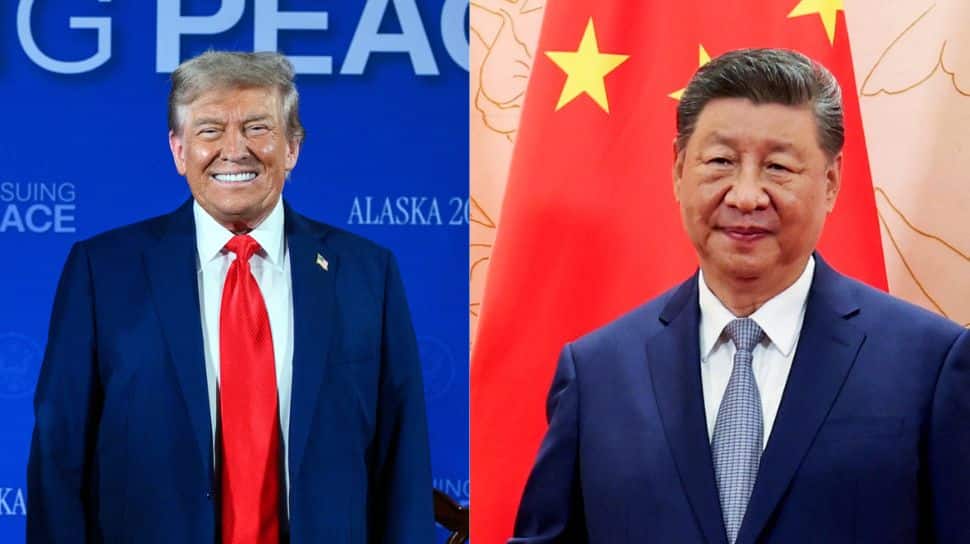
The United States will impose a 100% tariff on all goods imported from China starting November 1, 2025, President Trump announced Friday. This significant tariff hike is a direct retaliatory measure against China’s recent imposition of export controls on rare earth elements, critical materials used in advanced manufacturing.
China’s near-monopoly on rare earth processing, accounting for about 90% of the global supply, provides it with substantial leverage over key industries. The recent expansion of China’s export restrictions, which now cover the entire production chain, was labeled by President Trump as “extremely hostile” and “unheard of in International Trade.”
Rare earth elements are indispensable for modern technology, powering everything from smartphones and electric vehicle motors to advanced military systems and renewable energy infrastructure. The new 100% tariff will be added to existing trade war tariffs, effectively doubling the cost of many Chinese imports for American businesses and consumers. This could lead to widespread price increases and necessitate significant adjustments in global supply chains.
The diplomatic landscape has become increasingly tense. President Trump indicated that a planned meeting with Chinese President Xi Jinping might not happen due to Beijing’s “hostile” export controls. However, he later clarified that the meeting had not been officially cancelled, though the prospects remain uncertain. China’s Ministry of Commerce stated that its rare earth policies are aimed at safeguarding national security and interests.
This escalating conflict is increasingly characterized as economic warfare. Both nations are leveraging their strategic advantages: China with its rare earth dominance and the US with its control over advanced semiconductor technology. The upcoming November 1 deadline represents a pivotal moment, potentially accelerating efforts to diversify supply chains and leading to a further decoupling of the world’s two largest economies.