

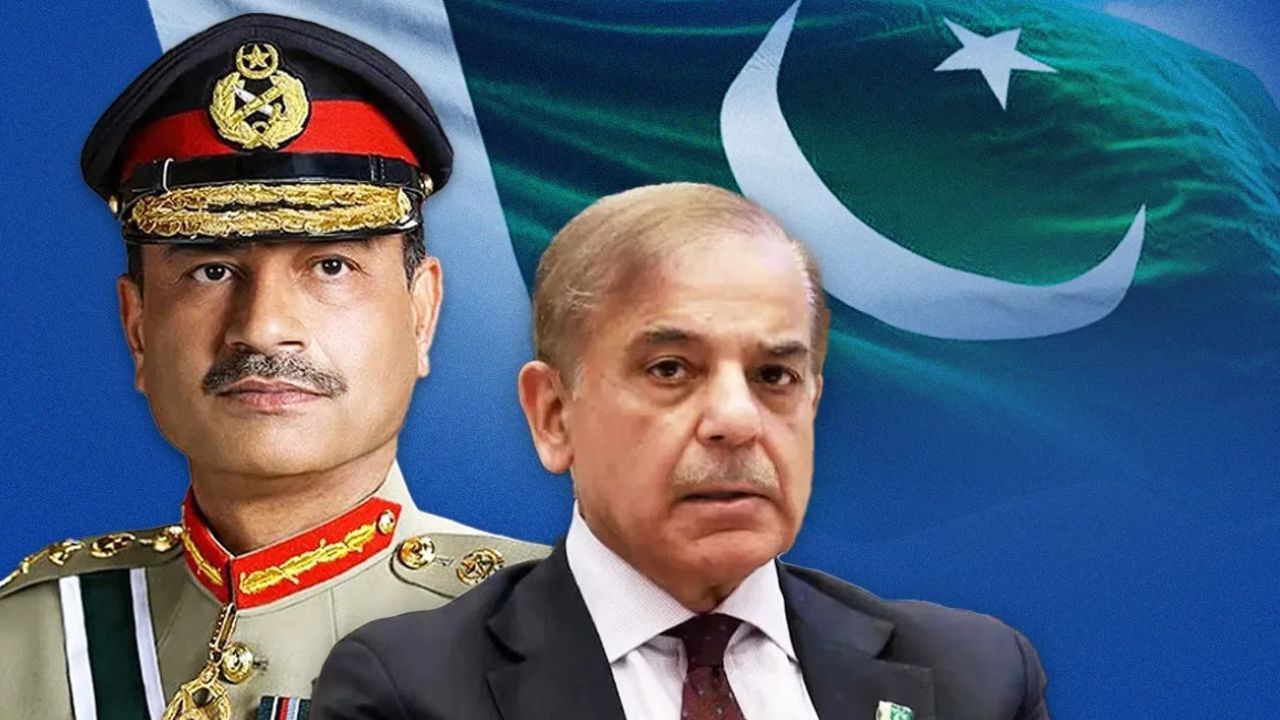
The Shehbaz Sharif government is striving to resolve the turmoil in Pakistan-administered Kashmir (PoK). A delegation of ministers and leaders has been dispatched to PoK to negotiate a resolution. Shehbaz Sharif has also declared his direct involvement and has directed the army to take necessary action.
Amidst these governmental attempts, the question arises: Can the unrest in PoK be brought to a halt? This article explores this issue in detail.
**What is driving the unrest in PoK?**
The Pakistan Kashmir Public Action Committee is protesting over 38 demands. The committee is demanding the removal of the 12 seats reserved for migrants in the PoK assembly. They are also seeking an end to the VIP culture.
There are two key drivers behind these demands. First, the PoK assembly has a total of 53 seats, with 27 required to form a government. The 12 reserved seats for migrants become pivotal. These reserved seats often determine which group controls PoK.
The pace of Pakistani government initiatives in PoK is often slow. PoK’s proximity to the Indian border contributes to its instability. The lives of the residents are difficult.
**Will the unrest in PoK be resolved?**
It does not appear likely currently. Shaukat Nawaz Mir of the Action Committee has stated that protests will continue until demands are met. Protesters have begun demonstrations involving the display of corpses in the capital, Muzaffarabad.
Leaders of the migrant community have indicated that they were granted these seats when they migrated from India during partition. They have stated that any move to take away these seats will lead to further protests.
According to 2017 data, the migrant population in Pakistan-administered Kashmir is 2.5 million. The original inhabitants number 2.7 million. This puts the Pakistani government in a complex situation.