

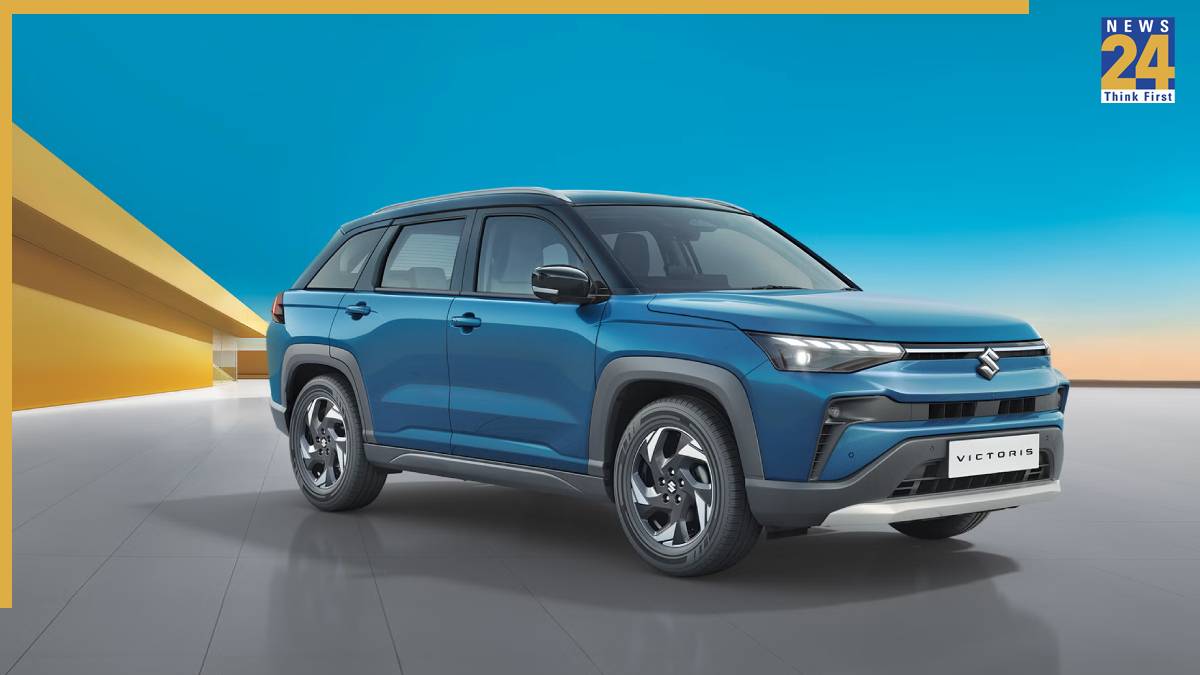
The Maruti Suzuki Victoris, recently introduced, aims to compete with the Hyundai Creta and Kia Seltos. In addition to focusing on domestic sales, Maruti Suzuki plans to expand its global presence by exporting the Victoris to a wide range of international markets.
Suzuki’s Export Strategy
Maruti currently exports the Grand Vitara compact SUV to approximately 60 countries. The Victoris is intended for a wider global footprint, targeting over 100 countries. The e-Vitara follows similar export plans, with shipments already in progress.
The e-Vitara has been exported to 12 European nations, including the UK, Germany, Sweden, the Netherlands, Hungary, Austria, Iceland, and Belgium, and the Victoris is expected to be exported to these and similar markets. The Victoris and e-Vitara will also be sent to various destinations in Asia, the Middle East, South and Central America, and Africa.
Growing Export Numbers
India’s export-oriented manufacturing is increasing, along with Maruti’s share in overall exports. In August 2025, Maruti’s exports totaled 36,538 cars. This accounted for approximately 20% of the company’s total sales of 1.8 lakh units for the month.
Maruti held a 40% share of India’s total car exports in FY25. The Victoris is anticipated to enhance the company’s export capacity.
Maruti’s Global Export Lineup
Maruti currently exports various models globally, including the Fronx, Jimny, Dzire, Baleno, Swift, Ertiga, Celerio, S-Presso, Eeco, Ciaz, Grand Vitara, Alto, Brezza, Ignis, XL6, and Wagon R.
The Fronx is presently Maruti’s most successful export model, having recently reached the 1 lakh export milestone. The Fronx is exported to over 80 countries, and Suzuki aims to replicate this success with the Victoris.