

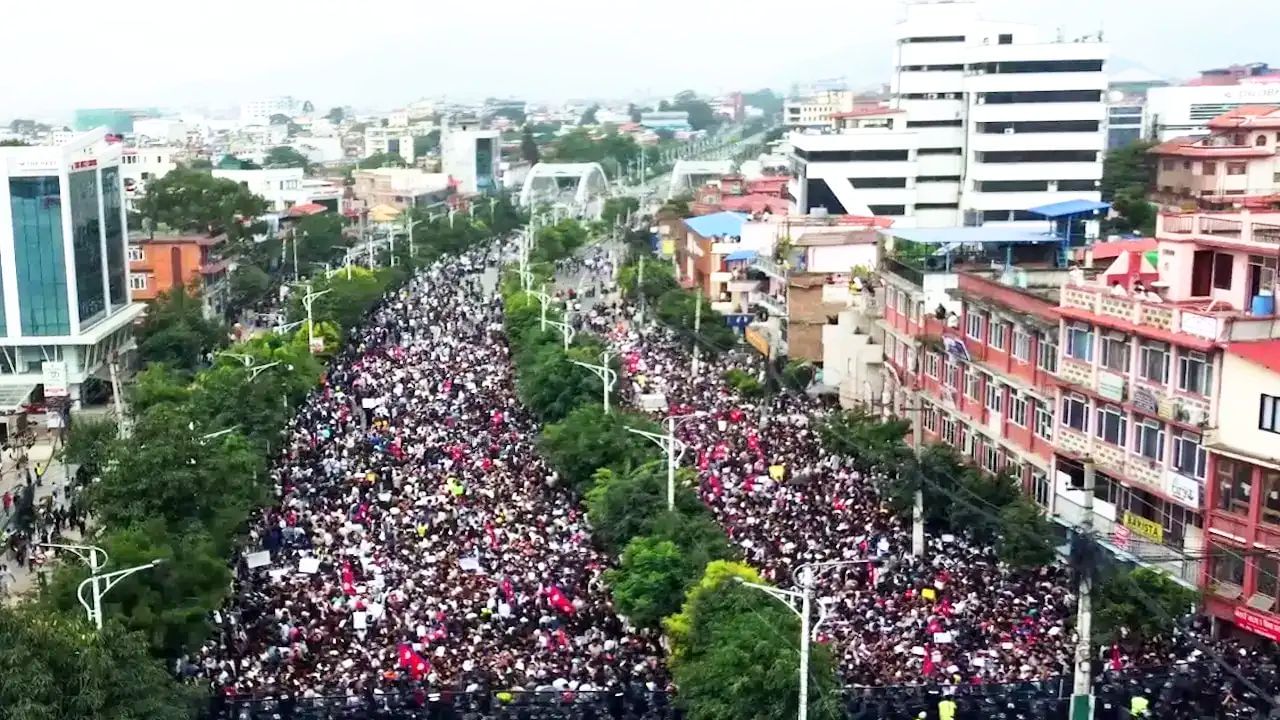
The recent events in Nepal, with their scenes of unrest and political turmoil, are not a new phenomenon. They are, instead, a continuation of a historical pattern where promises of significant transformation repeatedly fall short. Each major uprising, each period of widespread discontent in the country, has been accompanied by enthusiastic pledges for a better future. However, these promises frequently lead to disappointment, leaving the Nepali people with a sense of disillusionment and a persistent yearning for genuine change. The outcome remains the same: governments change, new leaders emerge, but social justice, equality, and a truly representative democracy continue to be elusive, creating further instability.
The article explores this ongoing theme, focusing on the incomplete nature of prior revolutions, where critical issues of injustice and inequality were left unresolved. These unresolved historical issues create the conditions for new conflicts. This article examines the important moments in Nepal’s ongoing fight for progress, questioning whether the current situation will finally break the cycle of broken expectations.
The 1951 downfall of the Rana regime saw the end of autocratic governance. The Nepali Congress, leftist organizations, and King Tribhuvan cooperated to overthrow the Rana oligarchy. The King’s return to power, aided by India, was linked with promises of elections and recognizing political parties, which signaled a new era for Nepal. However, the revolution was only partially successful. The monarchy preserved considerable power, the bureaucracy went unchanged, and the prospect of democratic changes was diminished.
In 1959, B.P. Koirala’s democratically elected government was quickly ended. King Mahendra dismissed him, disbanded the parliament, and introduced the Panchayat system, which eliminated the democratic experiment and ushered in decades of authoritarian rule. The hopes created in 1951 were dashed, and Nepal was locked in a controlled democracy for three decades.
During the Panchayat era (1960-1990), political groups were outlawed, opposition was crushed, and democratic voices were silenced. Frustration developed among students, laborers, and activists who were fighting for their rights. Reforms in education and healthcare never happened. This resulted in a rising of discontent and the emergence of small rebellions.
By the late 1980s, economic hardship, corruption, and inequity had stoked public fury. The 1990 uprising included large-scale protests, which resulted in deaths. Finally, King Birendra was compelled to comply with requests for multi-party democracy. This rebellion was a symbol of the suppressed voices and served as the foundation for democratic consciousness in Nepal.
The 1990 constitution brought optimism. Nepal transitioned to a constitutional monarchy and multi-party democracy. However, political conflicts and instability dominated the years that followed. Marginalized groups were overlooked, which strengthened the belief that actual change was unattainable, which in turn led to the rise of the Maoist insurgency.
The Maoist insurgency (1996-2006) aimed to eliminate the monarchy and create an inclusive republic, concentrating on class, caste, and gender inequalities. Over 17,000 lives were lost in the battle, which drew attention to the complaints of marginalized groups. The government frequently reacted with brutality.
The 2006 People’s Movement II was a critical moment. Millions of people took to the streets to demand democracy. King Gyanendra was forced to give up power, and Nepal became a republic. The Maoists joined the peace process, and the constitution-making began.
The 2015 constitution promised federalism, secularism, and republicanism but did not address the concerns of minority groups. The catastrophic earthquake of 2015 and the Indian border blockade made existing tensions worse.
Following 2015, Nepal continued to struggle with unfulfilled promises. The youth’s restricted job possibilities, insufficient improvements in education and healthcare, and corruption persisted. Balen Shah’s election as Kathmandu’s mayor brought hope, but it did not completely address systemic issues.
The present unrest, sparked by the Gen-Z uprising, indicates a deep-seated dissatisfaction with the current system. The youth are demanding accountability, openness, and employment possibilities. If these needs are not satisfied, Nepal may face another period of instability.