

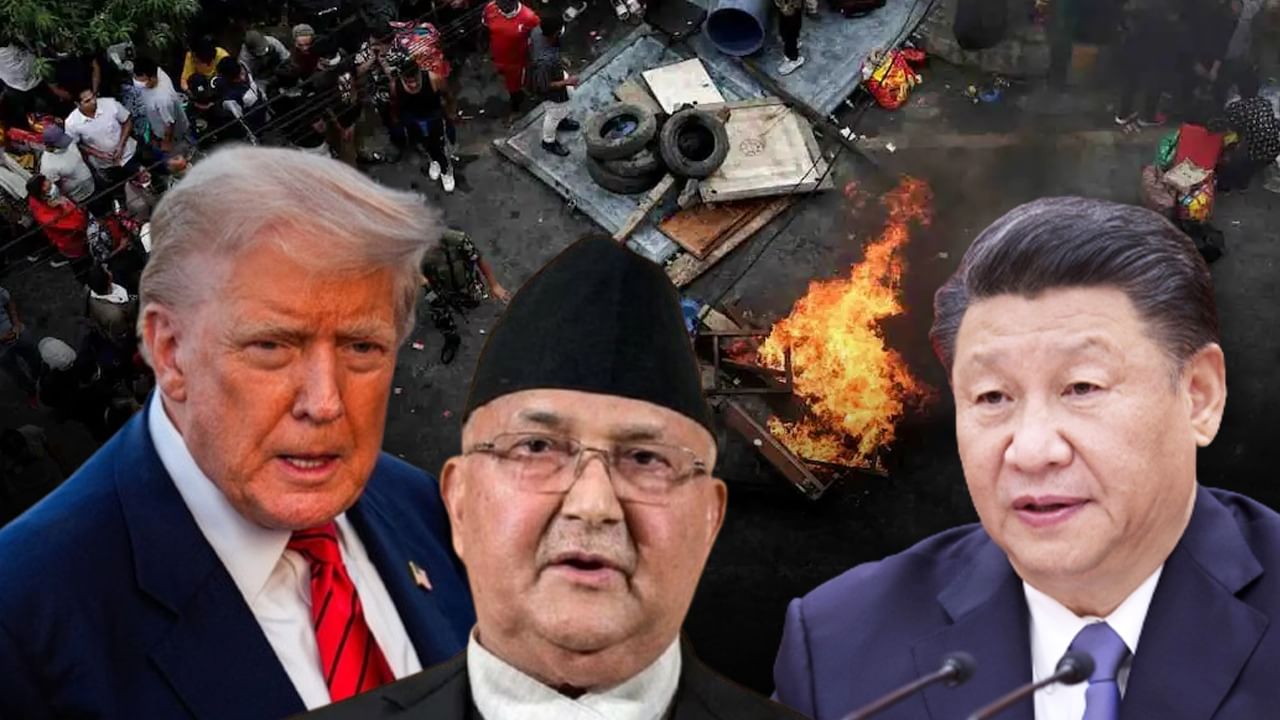
A swift two-day youth-led movement in Nepal resulted in the removal of former Prime Minister KP Oli. The political situation in Nepal this week has significant repercussions, not just for Nepal, but for the wider Asian geopolitical landscape, particularly considering Oli’s close ties with China.
The removal of Oli is seen as a strategic move by the United States to limit China’s influence. Nepal has historically balanced its relationships between India and China. However, under Oli, Nepal’s alignment with China became more pronounced. He supported Beijing’s ‘Belt and Road Initiative,’ and even participated in China’s Victory Day parade, which was seen as a concerning development by the United States.
Reports indicate the United States revived the Millennium Challenge Compact (MCC) in Nepal this year. This project, backed by approximately $500 million, focuses on strengthening energy and road infrastructure. It is seen as a direct competitor to China’s ‘Belt and Road.’ Therefore, some analysts believe the US was involved in the protests against Oli.
With Oli gone, Sushila Karki has become the interim Prime Minister. Karki has good relations with India, having studied at Banaras Hindu University and acknowledging PM Modi’s contributions. This suggests Nepal’s foreign policy is shifting away from China and towards India and the US.
India and the United States had strained relations due to tariff disagreements a few years ago. However, the situation is improving. Discussions between Prime Minister Narendra Modi and US officials are increasing. A US delegation may visit India soon, including a deal for -8I aircraft. Clarity on tariffs could further strengthen US-India ties. This creates pressure on China because India is the only country in Asia that can challenge China. The United States knows this and is trying to improve its relationship with the Modi government.
Pakistan has been China’s main ally for a long time. China provides economic and defense support to Pakistan. However, Pakistan’s own political and economic problems have changed things. US President Donald Trump seems to be favoring Pakistan in his second term. The Pakistani Army Chief recently had dinner with the US President at the White House. This is a sign that the US is trying to get China’s most trusted ally on its side.