

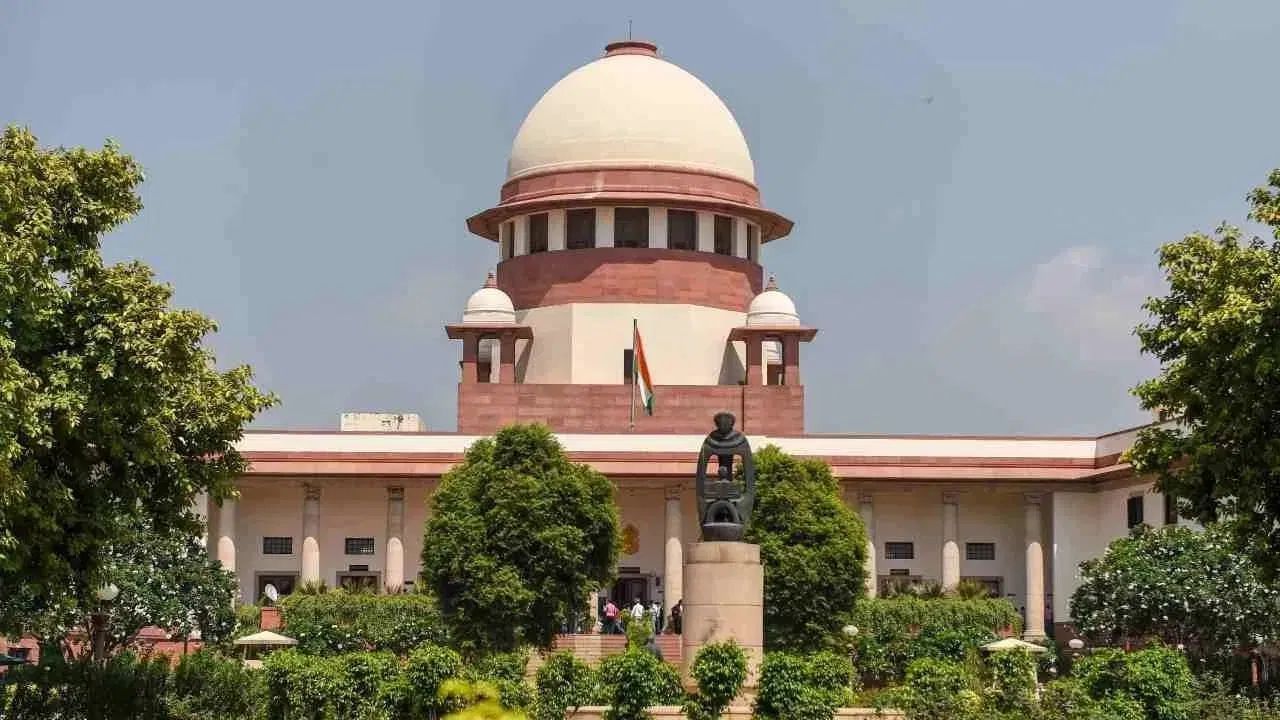
The relationship between Governors and state governments has often been strained, with reported conflicts across various states including West Bengal, Tamil Nadu, and Punjab. The Supreme Court is currently addressing this through a Presidential Reference. The central government has presented its position in this legal matter for the first time. The Chief Justice emphasized the original intent of the Constitution’s framers for a cooperative relationship between Governors and state governments.
During the Supreme Court proceedings, the central government argued on the powers of Governors concerning bills, stating that Governors can withhold bills deemed unconstitutional and return them for reconsideration. Solicitor General Tushar Mehta, rebutting arguments from the Punjab government, clarified that Governors have discretionary powers beyond simply granting approval to a bill.
The central government detailed the process of Governors ordering reconsideration. Solicitor General Tushar Mehta explained that upon returning a bill for reconsideration, the Governor also formally declares that approval is not being given. The Governor’s message accompanying the returned bill, as per Article 200, Clause 1, will determine the scope of the reconsideration.
Solicitor General Tushar Mehta further clarified that bills sent back for reconsideration and returned for approval within the same year will retain their original bill number. However, if the legislature reconsiders the bill in the subsequent year, a new bill number will be assigned.
The central government contested the Punjab government’s arguments. The central government asserted that a Governor has no discretion except to invalidate a bill. SG contested the argument by Punjab government’s lawyer, Arvind Datar. He said that even if a bill is invalid, the Governor’s only recourse is to approve it. SG provided specific examples.
The central government argued that Governors are empowered to block bills deemed explicitly unconstitutional. SG Tushar Mehta, representing the center, argued that the court should exercise caution when interpreting constitutional provisions under Sections 200 and 201, considering potentially extreme future circumstances.
The central government maintains that the Governor is an integral part of the Legislature. The claim by opposition states that the powers of consent are executive in nature is fundamentally incorrect. Solicitor General Tushar Mehta further stated that the Governor’s consent forms a crucial part of the legislative process, characterized as semi-legislative or self-specific.
The claim by opposition states that the powers of consent are executive in nature is fundamentally wrong. However, the executive can assist in the creation of a bill, which can be presented before the legislature. Once the process is complete, the process is legislative in nature until consent is granted. This is why the governor is considered a part of the legislature.
Chief Justice’s perspective on the matter. CJI B.R. Gavai remarked that the Constitution’s framers envisioned a harmonious relationship when defining the role of Governors. CJI B.R. Gavai added that the provincial governments (now states) were often involved in the Governor’s appointment process.
Understanding the nature of a Presidential Reference. The Indian Constitution grants the President substantial powers, including the ability to directly issue orders to state and central governments, bypassing the Supreme Court. Article 143 of the Constitution outlines Presidential References. They differ from standard legal procedures. If the President deems an issue legally or publicly important, they may seek the Supreme Court’s advice on any law or constitutional matter.
The Presidential Reference followed the Supreme Court’s April 8th ruling on the Tamil Nadu Governor case, which stipulated that a Governor could not indefinitely withhold bills.