

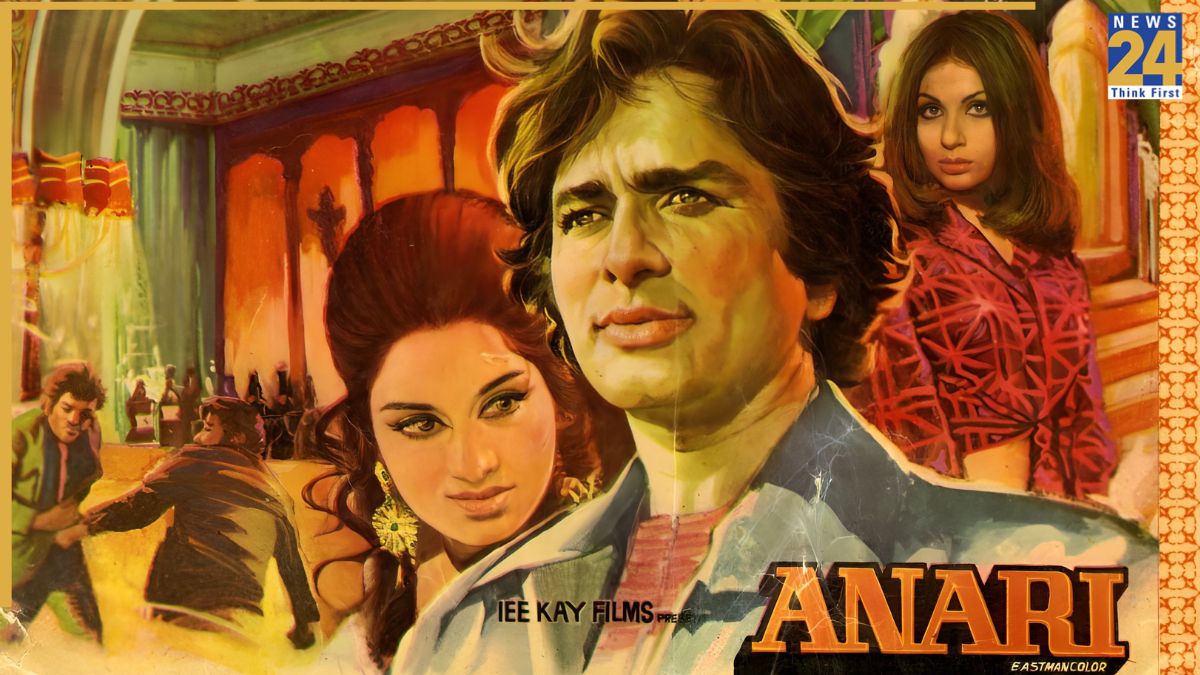
In 1975, a year that produced celebrated Hindi films like ‘Sholay’ and ‘Jai Santoshi Maa,’ director Asit Sen released ‘Anari,’ a film often considered the weakest in his career. The movie featured Sharmila Tagore and Shashi Kapoor, whose on-screen chemistry was not well-received, and Moushumi Chatterjee, whose role did not fit well with the overall narrative. The film’s structure and character development are significantly weaker than Sen’s other works, suggesting a decline in his career. This decline is further reflected in his later films such as ‘Maa Aur Mamta’ and ‘Bairaag,’ starring Dilip Kumar.
‘Anari’ suffers from its fragmented production, with visible gaps in the screenplay. A key example of this is when Sharmila Tagore’s character, Poonam, a woman seeking to escape poverty, tells Kabir Bedi’s character, Vikram, a man involved in criminal activity, that she had been rejected by the hero, Raja (Shashi Kapoor). The scene that Poonam describes is missing from the film. The central plot involves the innocent Raja who is drawn into a criminal scheme orchestrated by a con artist (Utpal Dutt, in a Raj Kumar wig) who pretends to be the heir to a wealthy family. The patriarch of the wealthy family (Harindranath Chattopadhyay) is blind, facilitating the deception. This forms the second, and more complicated, part of the narrative.
In the first part, Sharmila Tagore plays Poonam, a woman from an impoverished home seeking a better future. She wants to enhance her relationship with Raja for a brighter future, which is understandable. However, Raja is burdened with family responsibilities after his brother (Kader Khan, unrecognizable) is killed due to his union activities. The screenplay is a chaotic mess, with characters who feel aimless and disconnected. The most interesting character is Sharmila Tagore’s Poonam. She wants to change her fate. She provides Raja with several opportunities to ‘rescue’ her, but how can she be rescued by someone who needs rescuing himself?
‘Anari’ had the potential to offer a compelling look at the struggles of those facing financial ruin. Director Asit Sen appears to have been hampered by financial constraints and a narrative that undermines its characters. The actors appear to struggle with their roles, and the dialogue feels forced. The role of Moushumi Chatterjee is not clearly defined. The songs by Laxmikant-Pyarelal are notably subpar, unlike their other work that year. The film’s overall issues suggest a lack of coherence in its creation.