

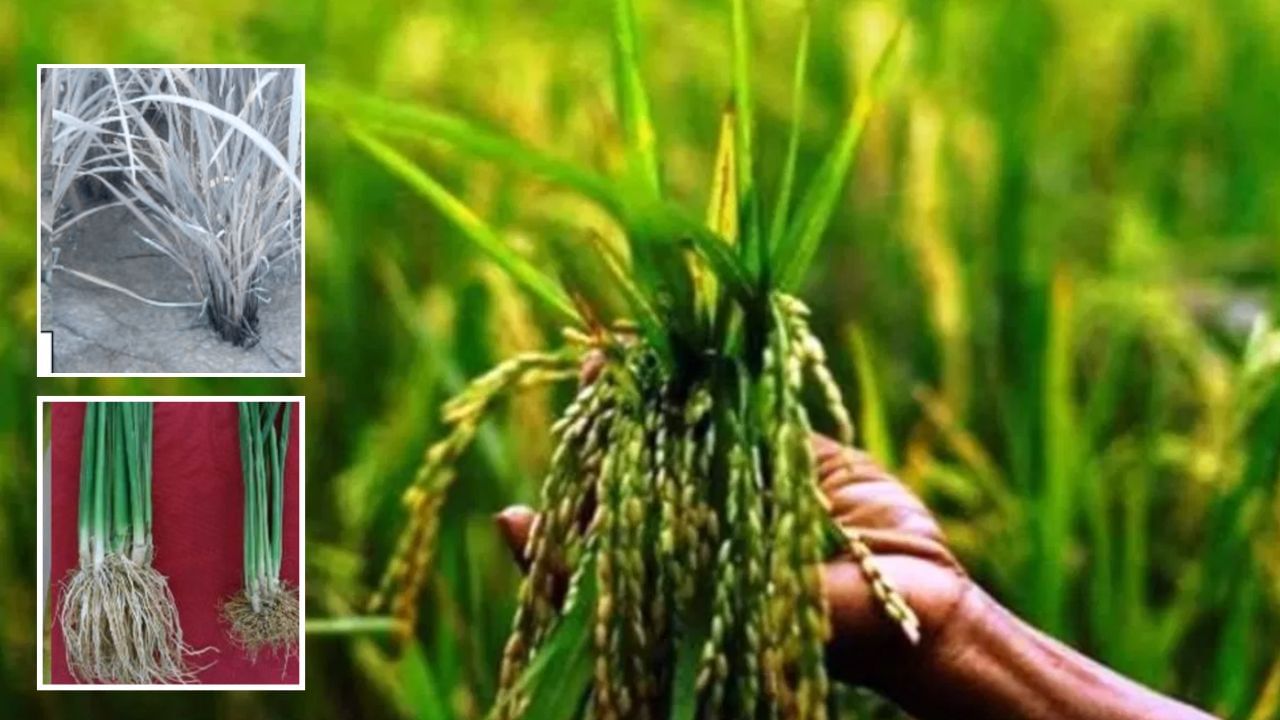
In India, various rice varieties are cultivated, each with its distinct characteristics. However, farmers are facing challenges due to a virus. First identified in 2001, this virus causes rice crops to turn black. This Southern Rice Black-Streaked Dwarf Virus (SRBSD) was initially detected in southern China. The government and agricultural scientists in Haryana are taking precautionary measures. This article discusses the virus and its effects on crops.
Haryana, a major rice-growing state, relies heavily on rice as a key crop. Its basmati rice is known worldwide. The government recognizes that this reputation is now at risk. The issue was addressed in the Haryana Legislative Assembly. Agriculture Minister Shyam Singh Rana stated that the virus has affected roughly 92,000 acres of the 4 million acres of rice planted in the state.
The government is monitoring the situation and recommends that farmers follow the advice of agricultural scientists and adhere to government directives during planting to lessen the impact of these diseases.
What is the SRBSD Virus?
The Southern Rice Black-Streaked Dwarf Virus (SRBSD) was first discovered in China. Until 2008, the virus was only present in southern China. It was first detected outside of China in Vietnam in 2009, and its effects have since been seen in other countries.
How Does the Virus Affect Rice?
The virus spreads through the White-backed Plant Hopper (WBPH), which feeds on the sap of rice plants and transmits the virus from infected to healthy plants. In simple terms, the virus prevents rice plants from growing properly. Rice plants afflicted by this disease are up to 40% shorter, considerably reducing yields.
The virus is most damaging shortly after planting, potentially causing crop failure. Severely infected plants wither and die, and the bottoms of the plants turn black. Small, striped, white or black waxy galls are apparent on the stems of infected plants.
How Long Does the Virus Last?
Studies show that the SRBSD virus is most effective in its early stages, potentially reducing crop production capacity by up to 50%. However, its impact lessens over time. The virus is most harmful when the crop is sprouting. If the crop survives this stage, there is no need for alarm. This disease was detected in India three years ago.
How to Protect Your Crop from the Virus?
Scientists have provided advisories to combat this virus. Agricultural scientists offer farmers information about the virus during rice planting. The advisories state that if the White-backed Plant Hopper is found, farmers should spray Paxolem 10 SC (Triflumizopyrim) 235 ml per hectare, Oshin Token 20SG (Dinotefuran) 200 grams per hectare, or Chase 50 WG (Pymetrozine) 300 grams per hectare. For better results, spray the medicine at the base of the plant, thus stopping the virus from spreading.
Which Rice Varieties are Affected?
Several rice varieties are affected. Research by MARU IARI indicates that Basmati (Pusa-1962, 1718, 1121, 1509, 1847, and CSR-30) and non-Basmati (PR-114, 130, 131, 136, Pioneer Hybrid, and Arai Swift Gold), among others, are impacted. This has resulted in lower production, making it difficult to meet market demands.