

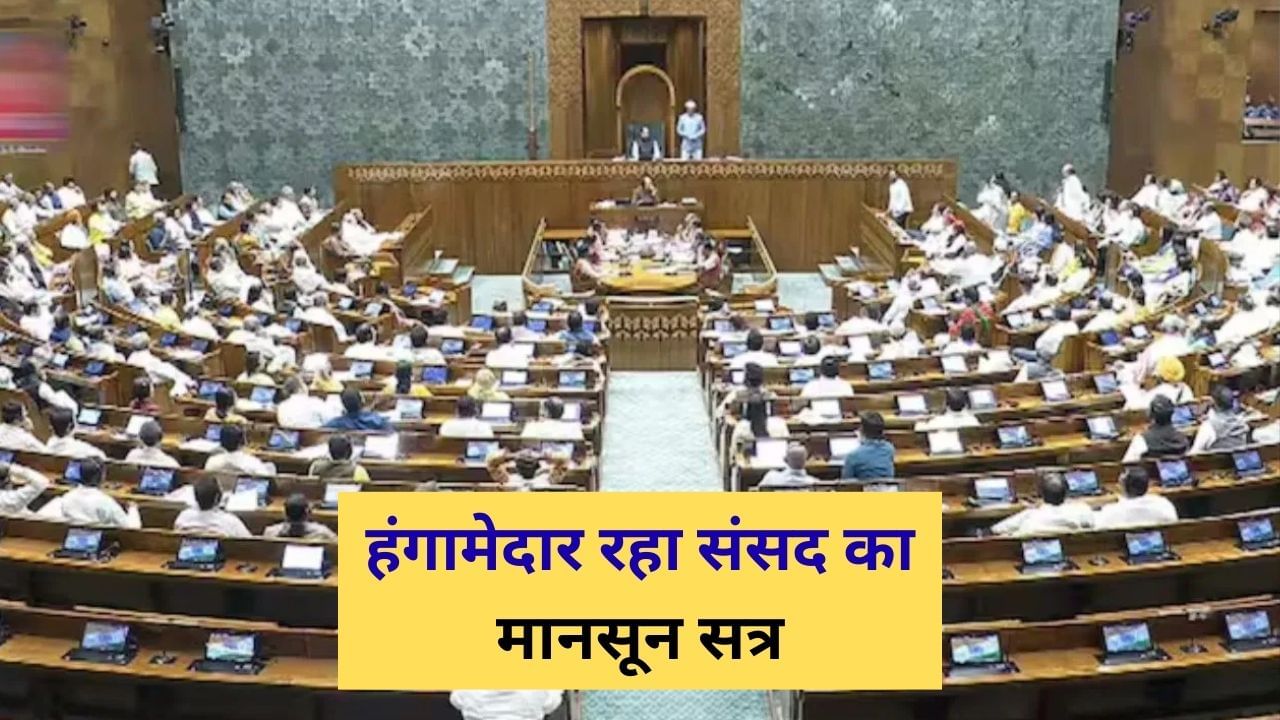
The monsoon session of Parliament was marked by considerable disruptions, resulting in significantly reduced productivity. The Lok Sabha, which had planned for 120 hours of debate, was able to conduct only 37 hours of work, resulting in a loss of 83 hours. The Rajya Sabha also faced similar setbacks, completing only 47 hours of work from the scheduled 120 hours, wasting 73 hours. The effective work done in the Lok Sabha was just 31%, and in the Rajya Sabha, it was 38%. This session occurred between July 21 and August 21, with discussions covering issues like terrorism, Operation Sindoor, and space programs.
A total of 12 bills were passed in the Lok Sabha and 14 in the Rajya Sabha. Both houses collectively passed 15 bills. The sessions were marked by considerable disruption and protest, especially concerning the Special Intensive Revision and during discussions on Operation Sindoor. The disruptions caused substantial financial damage, with approximately 200 crore rupees of public money lost.
In the Lok Sabha, only 55 questions received oral answers. Despite having 419 questions on the agenda, only 55 questions received oral responses. In the Rajya Sabha, only 14 questions were answered during the question hour due to the frequent disruptions. Furthermore, only seven zero-hour submissions and 61 special mentions could be addressed due to the disruptions.
Detailed discussions on ‘Operation Sindoor’ were conducted in response to the Pahalgam terrorist attack. These discussions took place in the Lok Sabha on July 28 and 29, and in the Rajya Sabha on July 29 and 30. In the Lok Sabha, the discussions lasted for 18 hours and 41 minutes, with 73 members participating and Prime Minister Modi responding. In the Rajya Sabha, discussions lasted 16 hours and 25 minutes, with 65 members participating, and the Home Minister responded.
Parliamentary discussions are costly. In 2012, the cost per minute of discussion was about 2.5 lakh rupees, which equates to about 1.5 crore rupees per hour. These figures have likely increased significantly in the years since. These expenses ultimately come from the taxpayers.
The 12 bills passed by the Lok Sabha were: 1. Re-adjustment of representation of Scheduled Tribes in Assembly constituencies of Goa state, 2025; 2. Merchant Shipping Bill, 2025; 3. Manipur Goods and Services Tax (Amendment) Bill, 2025; 4. Manipur Appropriation (No. 2) Bill, 2025; 5. National Sports Administration Bill, 2025; 6. National Anti-Doping (Amendment) Bill, 2025; 7. Income Tax Bill, 2025; 8. Taxation Laws (Amendment) Bill, 2025; 9. Indian Ports Bill, 2025; 10. Mines and Minerals (Development and Regulation) Amendment Bill, 2025; 11. Indian Institutes of Management (Amendment) Bill, 2025; 12. Promotion and Regulation of Online Gaming Bill, 2025.
15 bills were passed in the Rajya Sabha: 1. Bills of Landing Bill, 2025; 2. Carriage of Goods by Sea Bill, 2025; 3. Coastal Navigation Bill, 2025; 4. Manipur Goods and Services Tax (Amendment) Bill, 2025; 5. Manipur Appropriation (No. 2) Bill, 2025; 6. Merchant Shipping Bill, 2025; 7. Re-adjustment of representation of Scheduled Tribes in Assembly constituencies of Goa state, 2025; 8. National Sports Administration Bill, 2025; 9. National Anti-Doping (Amendment) Bill, 2025; 10. Income Tax Bill, 2025; 11. Taxation Laws (Amendment) Bill, 2025; 12. Indian Ports Bill, 2025; 13. Mines and Minerals (Development and Regulation) Amendment Bill, 2025; 14. Indian Institutes of Management (Amendment) Bill, 2025; 15. Promotion and Regulation of Online Gaming Bill, 2025.