

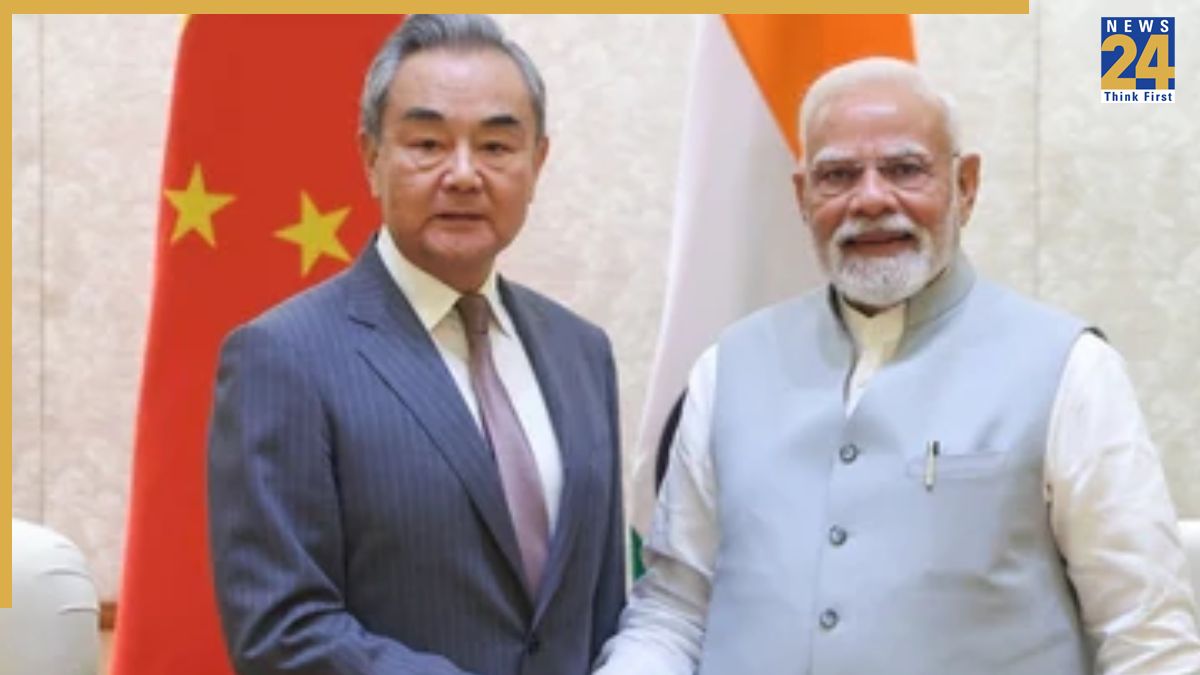
India and China have agreed to restart direct flights between the two nations, with a focus on connecting mainland China and India directly. This decision emerged from discussions during Chinese Foreign Minister Wang Yi’s visit to India. Furthermore, both countries have agreed to finalize a new Air Services Agreement.
A joint statement revealed, “Both sides agreed to resume direct flight connectivity between Chinese mainland and India at the earliest, and finalize an updated Air Services Agreement. They also agreed on the facilitation of visas to tourists, businesses, media and other visitors in both directions.” Flights were previously halted due to the Doklam crisis and the Covid-19 pandemic. The two nations also committed to expanding the Indian pilgrimage to Mt. Kailash/Gang Renpoche and Lake Manasarovar/Mapam Yun Tso in Tibet, starting in 2026.
The issue of reopening the Nathula route for the yatra was previously brought up in Parliament by Sikkim Rajya Sabha MP DT Lepcha, which led to cooperative efforts between the Government of India and the Government of Sikkim. The return of the yatra via Nathula is expected to offer a spiritual opportunity for pilgrims while also boosting tourism and strengthening local economies along the route. On August 19, Prime Minister Narendra Modi met with Wang Yi in Delhi. PM Modi asked Wang Yi to convey his cordial greetings to Chinese President Xi Jinping and Premier Li Qiang and expressed his anticipation of attending the Shanghai Cooperation Organisation (SCO) Tianjin Summit in China and meeting President Xi Jinping. India will fully support China’s work as the rotating chair of the SCO and ensure the summit’s complete success.
PM Modi highlighted that India and China, both ancient civilizations, have a rich history of friendly exchanges. The meeting between the leaders in Kazan last October represented a turning point in the enhancement and progress of bilateral relations. India and China are partners, not competitors, and share the common goal of accelerating development. They should reinforce exchanges, deepen understanding, and broaden cooperation. Both sides should also address border issues carefully and prevent any differences from becoming disputes.