

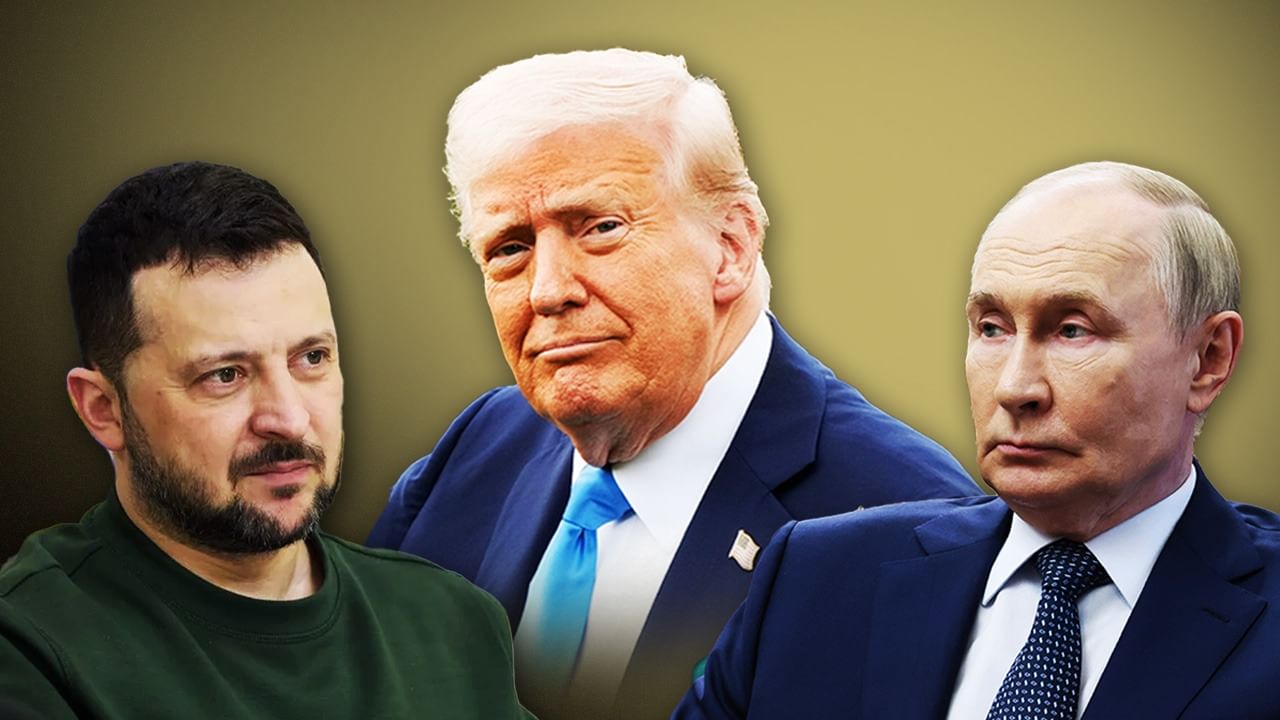
The meeting between Donald Trump and Volodymyr Zelenskyy has major implications, not just for Ukraine, but for the future of Europe. The anticipation is high for the meeting, and the pressure is on Zelenskyy even before the talks. There are questions about what will happen if talks between Trump, Zelenskyy, and Europe fail.
The meeting will determine the future of Ukraine and all of Europe. Trump is thought to be ready to use incentives, threats, or pressure to convince Zelenskyy to agree with him. Trump began putting pressure on Zelenskyy even before they met.
Trump has given Zelenskyy the right to make the final decision, but he has also warned him about what could happen if a ceasefire isn’t reached. If Zelenskyy doesn’t accept Putin’s conditions for a ceasefire, Ukraine could lose more land to Russia, similar to what happened in Crimea. Putin has already stated that even if there is no ceasefire, he will keep control of Luhansk, Donetsk, Zaporizhzhia, and Kherson. This brings up the question of what options the U.S. will have if an agreement isn’t reached.
It is thought that the U.S. might stay out of the war, like it did at the start of World War I and World War II. The U.S. could remain neutral until the war expands to Europe. If the war spreads to Europe, the U.S. might join the winning side.
The U.S. stayed out of both World War I (1917) and World War II at first. The U.S. declared war on Germany in 1917, three years after World War I began. In World War II, the U.S. entered the war against Japan almost two years after the war started, joining the Allies. In both cases, the U.S. was on the winning side. However, the reasons for the U.S. joining each war were different. It is believed that the U.S. supported the stronger side.
If the war in Ukraine spreads to Europe, the U.S. must decide whether to support Russia or Europe. This decision will be based on an assessment of their economic and military strength.
The world hopes for peace from this meeting. However, it is unlikely, because of the preparations in Europe. France and the UK have already made plans for what will happen after a ceasefire. They plan to deploy a reassurance force in Ukraine.
European countries agree with the plans of France and the UK.
Zelenskyy may ask Trump for a security guarantee after a ceasefire. However, Putin is unlikely to agree to allow a reassurance force to be deployed in Ukraine. NATO has already deployed a reassurance force in nine Eastern European countries. This is to provide security to those countries.
The Reassurance Force is in Estonia, Latvia, Lithuania, Poland, Finland, Bulgaria, Hungary, Romania, and Slovakia. The armies of four countries border Russia. The border of Poland is near Belarus, a friend of Russia. Romania and Bulgaria are connected to the Black Sea. This means that Ukraine is the only part of Europe where NATO troops are not close to the Russian border. Putin will never allow a reassurance force to be stationed in that area.
Europe has only one option: to keep sending weapons to Ukraine, which will keep Russia involved in the war. Europe has already started preparing for this. Ukraine is said to have started producing the Flamingo long-range cruise missile.
Ukraine says the missile is made by them, but the technology is thought to have come from Europe. This will allow Ukraine to attack Russia from up to 3000 km away without Europe being blamed.