

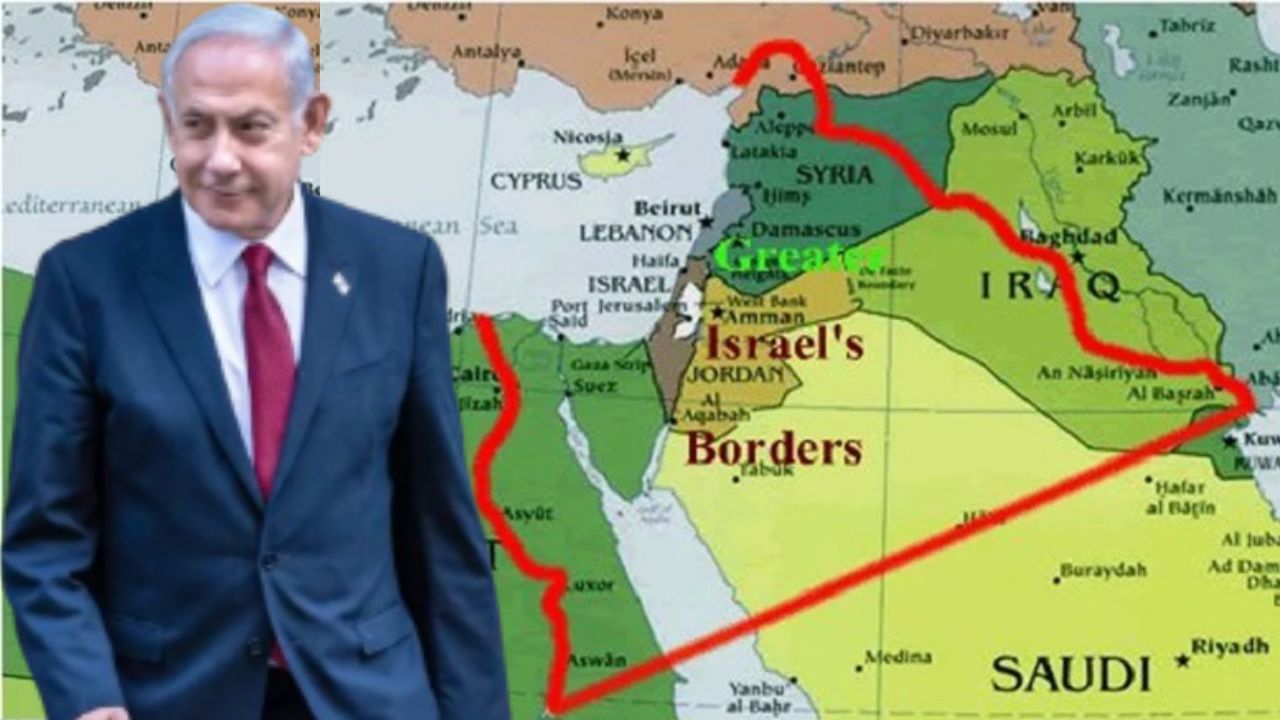
With the Gaza conflict ongoing, Israeli Prime Minister Benjamin Netanyahu’s recent invocation of ‘Greater Israel’ has ignited further tensions in the Middle East. Netanyahu views this as a matter of profound historical and spiritual significance. This vision, if realized, would represent a substantial expansion of Israel, extending its control beyond existing territories to include parts of Palestine, Jordan, Egypt, and possibly other countries.
The concept of ‘Greater Israel’ has both biblical and political roots, particularly within Zionist ideology. Rooted in the ideals of Theodor Herzl, the founder of Zionism, the vision calls for a Jewish state encompassing the land from the Nile to the Euphrates. The idea gained prominence following the Six-Day War of 1967 and remains a subject of ongoing regional discussion.
Defining the Boundaries of Greater Israel:
The biblical underpinnings of ‘Greater Israel’ provide context for potential borders. The land allocated to the Israelites, detailed in Joshua 13-22, extended from the southern region of Jerusalem to the Sea of Galilee in the north. The ‘promised land’ is described as stretching ‘from the Nile to the Euphrates,’ a region traditionally understood to be 50 miles wide and 150 miles long, often summarized as ‘from Dan to Beersheba.’
Based on this interpretation, the proposed expansion could involve:
* Western Iraq.
* Parts of Egypt.
* Lebanon and Syria.
* Northern Saudi Arabia.
Estimating the Size of Greater Israel:
Present-day Israel covers roughly 22,000 square kilometers. The realization of the ‘Greater Israel’ vision would expand the nation’s territory to approximately 100,000 square kilometers, including areas of Syria, Lebanon, Palestine, Egypt, and Iraq.
Historical Precedent: The 1990 Cairo Summit
The concept of ‘Greater Israel’ was a focus at the 1990 Arab summit in Cairo. During the summit, Muammar al-Gaddafi, then-President of Libya, showed Yasser Arafat, the leader of the Palestinian Liberation Organization, a map outlining the vision of Greater Israel. This map included Palestine, Jordan, Lebanon, Syria, Iraq, parts of northern Saudi Arabia, and significant areas of Egypt. This map had also been presented at the American Israel Public Affairs Committee (AIPAC) conference one year earlier.