

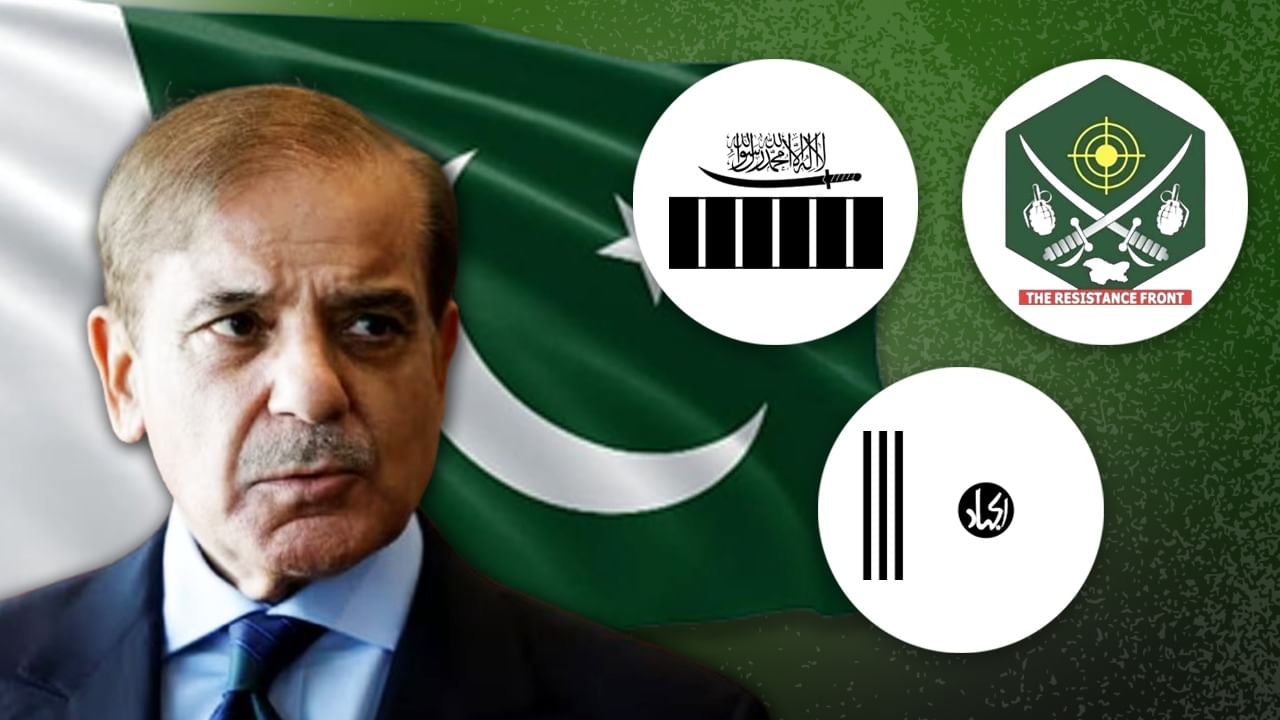
The US has recently designated the Baloch Liberation Army (BLA) and its associate, the Majeed Brigade, as foreign terrorist entities. This announcement comes during a period when Pakistan’s Army Chief, General Asim Munir, is in the United States for a second time in a month and a half. The US had previously added the TRF to this list. The prevalence of terrorism in Pakistan is stark, with roughly 80 terrorist organizations operating in the country, which has existed for 78 years. While some groups are under restrictions by the Pakistani government and international organizations, the networks that thrive on Pakistani territory have never been entirely dismantled.
Many groups are alleged to receive support from Pakistan, which it consistently denies. Some of these organizations include:
* **Lashkar-e-Taiba (LeT):** LeT became a prominent anti-India proxy for Pakistan in the 1990s. It is headed by Hafiz Muhammad Saeed, who continues to operate freely in Pakistan, despite facing international sanctions.
* **Jaish-e-Mohammad (JeM):** Founded by Masood Azhar in 2000 after his release during the IC-814 hijacking, JeM is considered a key player in suicide attacks in Pakistan. It has its headquarters in Bahawalpur, Punjab. It also has seven major training camps in Khyber Pakhtunkhwa (KPK), four in Pakistan-administered Kashmir (PoK), and has recently re-established camps in Taliban-controlled Afghanistan.
* **Haqqani Network:** This is an arm of Pakistan’s ISI, operating on the Afghanistan-Pakistan border. Led by Sirajuddin Haqqani, now the Interior Minister of Afghanistan, and subject to a $10 million US bounty, this network is viewed as the ISI’s tool in Afghanistan, supporting actions against India.
* **Islamic State-Khurasan (ISIS-K):** This organization emerged from splinter groups of TTP (Tehrik-e-Taliban Pakistan). Its bases are in eastern Afghanistan and the tribal areas of Pakistan. Despite its ideology being against Pakistan, some evidence suggests certain elements within Pakistan’s security agencies are quietly approving some of its actions.
The South Asia Terrorism Portal data indicates that Punjab province is a major hub for terrorist organizations in Pakistan, with 34 active groups, including Lashkar-e-Taiba (LeT), Jaish-e-Mohammad (JeM), Jamaat-ud-Dawa (JuD), and Lashkar-e-Jhangvi (LeJ), all linked to attacks in India. These networks remain largely active.
Some key organizations in Punjab are: Lashkar-e-Taiba (LeT), Jaish-e-Mohammad (JeM), Jamaat-ud-Dawa (JuD), Lashkar-e-Jhangvi (LeJ), 313 Brigade, Tehrik-e-Taliban Pakistan (TTP), and Falah-e-Insaniyat Foundation (FIF).
Khyber Pakhtunkhwa province hosts 21 terrorist organizations, including Tehrik-e-Taliban Pakistan (TTP), Hizb-ut-Tahrir, Lashkar-e-Islami, and the Islamic Movement of Uzbekistan. Balochistan province is home to 19 terrorist organizations. These include Baloch nationalist groups such as BLA, BRA, and BRAS, who are involved in armed conflict against the Pakistani government.
Major terrorist organizations in Balochistan include: Baloch Liberation Army (BLA), Baloch Republican Army (BRA), Baloch Students Organization (BSO-A), Daesh (ISIS), and Al-Qaeda.
Recent reports suggest that Sindh province, particularly Karachi, has turned into a hub for terrorist activities, with over 13 active groups, including Al-Qaeda, Sipah-e-Sahaba Pakistan (SSP), Sipah-e-Muhammad Pakistan (SMP), Lashkar-e-Jhangvi (LeJ), Daesh (ISIS), Jamaat-ul-Ahrar (JuA), People’s Aman Committee (PAC), and Balochistan Liberation Army (BLA).