

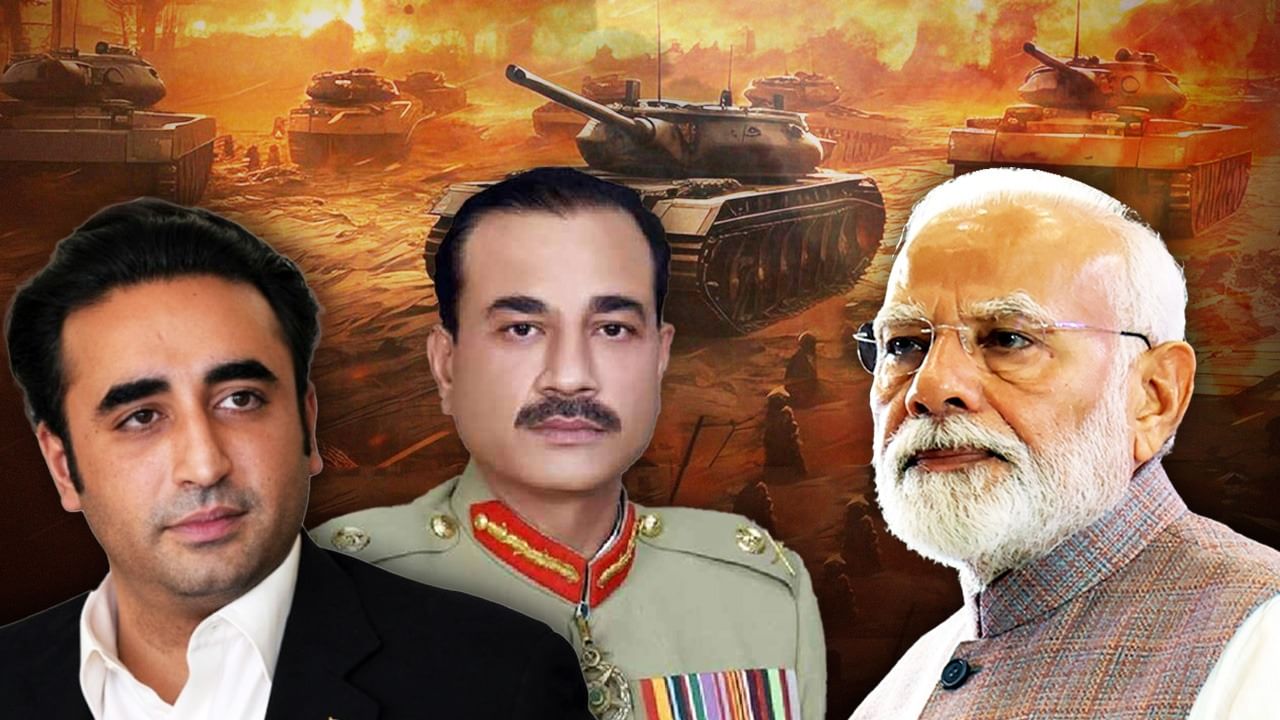
India’s recent decision to suspend the Indus Waters Treaty has deeply angered Pakistan following a terrorist attack in Pahalgam, Jammu and Kashmir. Pakistani leaders, from Army Chief Asim Munir to other high-ranking officials, are worried this could cause widespread economic damage and famine. Pakistan is responding by seeking international intervention and issuing strong warnings, including threats of military action.
India has responded by stating that it will not allow water and conflict to coexist. It has disregarded Pakistan’s warnings and indicated that the ongoing ‘Operation Sindoor’ will continue. This has led to questions about a potential conflict between the two countries over the Indus Waters Treaty. This article examines the threats made by Pakistani authorities and the strategic plans of India.
Pakistan’s Foreign Minister Bilawal Bhutto Zardari has threatened war if India suspends the treaty or builds dams. He believes that Prime Minister Narendra Modi’s announcement of water projects on the Indus River is an attempt to limit Pakistan’s water supply. Zardari has been speaking out about India’s water policies during his foreign trips.
Bhutto has said that the people of Sindh are prepared to protect the Indus River. He believes that Pakistan has the strength to confront Modi in a war, and has warned that Pakistan could reclaim its six rivers if another war begins. He has spoken out about the treaty before.
In June, Bhutto said that if India were to deny Pakistan its share of water under the Indus Waters Treaty, his country would initiate war. He has criticized India’s decision to suspend the treaty and threatened to cut off India’s water supply.
Pakistan Army Chief Asim Munir, speaking to Pakistani immigrants in Tampa, Florida, warned that if India were to obstruct the water flow to Pakistan, Pakistan would destroy Indian infrastructure. He also indicated that Pakistan would be willing to use nuclear weapons if necessary.
Prime Minister Modi provided details of ‘Operation Sindoor’ in the Lok Sabha on July 29th, detailing the government’s actions after the terrorist attack in Pahalgam. Modi stated that his government had ended the one-sided trade of terrorism and false hope by revoking Pakistan’s MFN status, imposing visa restrictions, and closing the Attari-Wagah border.
Modi referred to the Indus Waters Treaty, which was signed by a former Prime Minister and involved rivers of significant cultural and spiritual value to India. He said the government has decided to postpone the Indus Waters Treaty, prioritizing national interests and adding that blood and water should not flow together.
India is moving forward with plans to increase water extraction from the Indus River system. The focus is on the Chenab, Jhelum, and Indus rivers, which mainly supply water to Pakistan. One major plan is to expand the Ranbir Canal on the Chenab River.
India is also considering other irrigation and hydropower projects that might reduce water availability downstream. Reports suggest that India is considering a proposal to divert water from the Indus, Jhelum, and Chenab rivers to the rivers of northern Indian states, further limiting water flow to Pakistan. These projects may include building dams with significant water storage.
The Indus Waters Treaty, which was facilitated by the World Bank in 1960, divides the water from six rivers between India and Pakistan. India controls the eastern rivers (Sutlej, Beas, and Ravi), while Pakistan controls the western rivers (Indus, Chenab, and Jhelum). The treaty permits India to use the western rivers for irrigation and hydropower projects, but with restrictions to avoid affecting the water supply to Pakistan.