

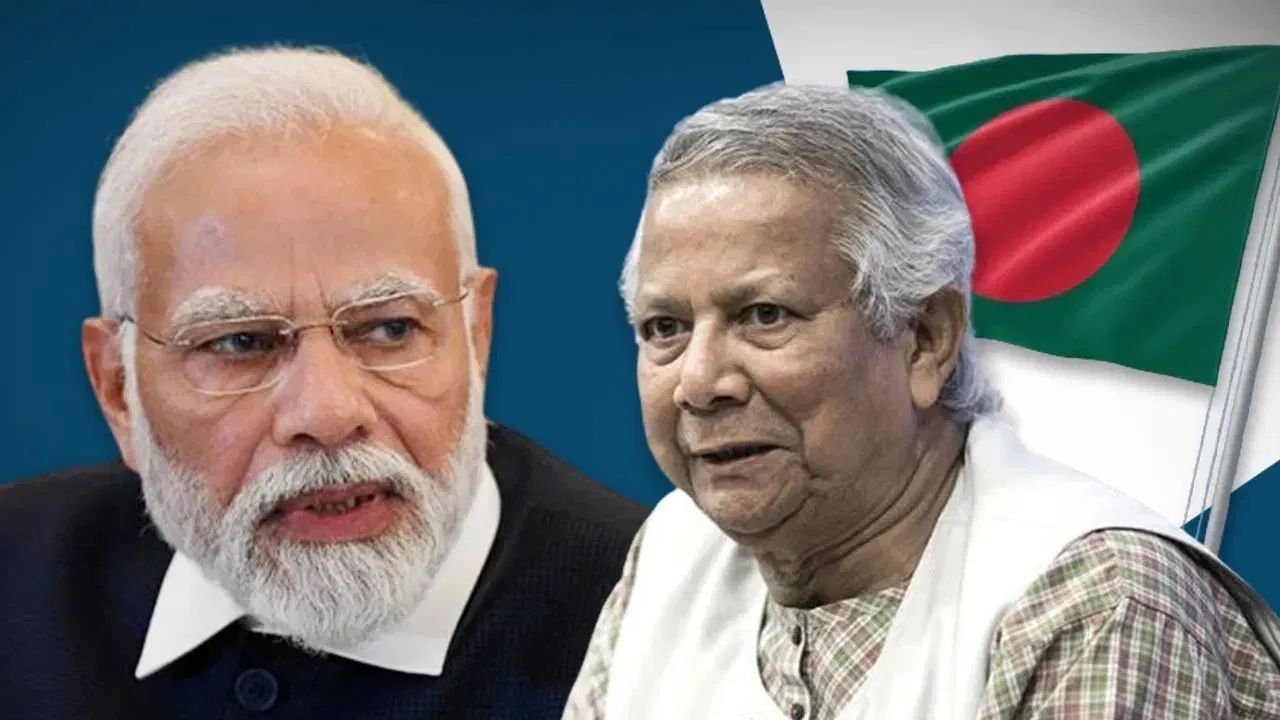
The relationship between India and Bangladesh has become increasingly tense. As a result, India has imposed significant trade restrictions. A new ban has been placed on the import of several jute products from Bangladesh via land routes. This recent measure follows earlier restrictions and signals escalating trade tensions.
According to the Directorate General of Foreign Trade (DGFT), the import of some jute products is now only restricted through land routes, but still permissible through the Nhava Sheva port. The ban affects various products including bleached and unbleached woven fabrics of jute and other bast fibers, twine, cordage, jute rope, and jute sacks and bags.
Earlier on June 27th, India restricted the import of some jute products and woven fabrics from Bangladesh via all land routes. Imports could still proceed through the Nhava Sheva port. Prior to that, similar restrictions were announced in April and May. Moreover, on May 17th, India implemented port restrictions on the import of readymade garments and processed food from Bangladesh. Further escalating tensions, India withdrew on April 9th the transshipment facility for exports from Bangladesh to various countries, except for the Middle East, Europe, and Nepal and Bhutan. These actions are connected to controversial remarks made by Muhammad Yunus, the head of Bangladesh’s interim government, during his visit to China.
The strained relationship between India and Bangladesh is impacted by India’s concern over the treatment of minorities, particularly Hindus, in Bangladesh. India has commented on this issue. The failure to protect minorities, particularly Hindus, has further strained ties, impacting trade. Bangladesh is a key competitor for India in the textiles industry. In 2023-24, trade between the two countries reached $12.9 billion. In 2024-25, India’s exports were $11.46 billion, with imports projected to be $2 billion.