

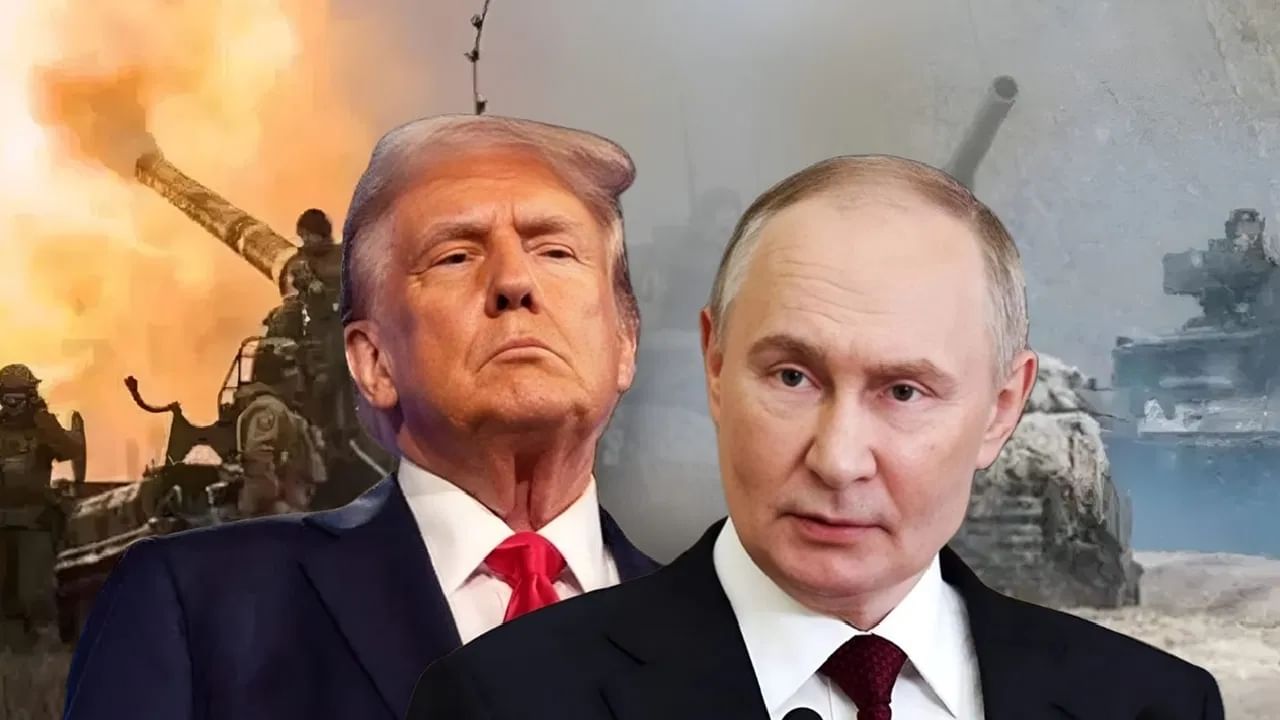
The prospect of a meeting between Russian President Vladimir Putin and former U.S. President Donald Trump has sparked alarm across Europe, triggering accusations that the EU and NATO are attempting to sabotage potential peace negotiations. The primary concern revolves around the possibility of Trump accepting terms that favor Putin, which could pressure Ukrainian President Zelensky into concessions and thereby constitute a Russian victory. This has spurred fears of further military actions by Putin within Europe, leading to claims that certain European countries are actively working to prevent a ceasefire agreement.
The Putin-Trump meeting, potentially set for August 15th, is considered a pivotal event capable of finalizing a ceasefire in the ongoing Russia-Ukraine war. Trump is reportedly optimistic that the meeting will achieve a ceasefire, a scenario that has heightened anxiety in European capitals. In response, European nations, in collaboration with Ukrainian and U.S. officials, are arranging meetings in the lead-up to the Putin-Trump discussion.
One meeting is planned in the UK, involving representatives from various nations to discuss the conditions of a potential ceasefire. European nations are concerned that Trump might bypass them and directly negotiate a peace agreement with Putin. Such an agreement could involve pressuring Zelensky to sign a ceasefire, thus marginalizing the European powers.
To counteract this, European countries are reportedly attempting to influence Trump. They are said to be engaged in discreet communications with Zelensky, encouraging him to reject any peace terms put forth by Trump and Putin. They are also ensuring the continued supply of arms to Ukraine, regardless of shifts in U.S. policy.
Sources suggest that countries like the UK, Germany, and France are reluctant to support a ceasefire, favoring the continuation of the war until Russia is decisively defeated, irrespective of the cost. Their stance stems from the perceived threat posed by Russia to Europe. There are concerns that a ceasefire could enable Putin to initiate operations against Europe, potentially starting with the Suwalki Gap.
NATO is particularly apprehensive about the potential seizure of the Suwalki Gap by Putin. If a ceasefire is achieved, Putin could capitalize on this 65-kilometer corridor connecting Kaliningrad to Belarus. The deployment of Russia’s 71st Division in Belarus exacerbates this fear. This highly capable division, formed in 2024, is stationed near the Suwalki Gap.
The 71st Division is a reorganization of the 200th Motor Rifle Division, which was involved in the 2014 annexation of Crimea and the 2022 Kharkiv offensive. The division is reportedly tasked with securing the Suwalki Gap. Simultaneously, Russia is believed to be preparing for possible military actions against Lithuania.
The increasing Russian activity in the region, including the presence of underwater drones, adds to the tensions. The statements of Belarusian President Alexander Lukashenko, viewed as an ally of Putin, have also amplified the concerns. Lukashenko’s remarks have been interpreted as threats directed at European countries.
Lukashenko’s remarks, particularly those concerning preparations for war in Belarus, serve as a warning to both Ukraine and Europe. His statements have heightened alarm throughout the region.
Lukashenko has implied that Russia will not lose, and that the consequences of defeat would be dire. Consequently, European countries are seeking to prolong the war, preventing a ceasefire and continuing to provide military aid to Zelensky.
Reports also suggest that Putin is planning missile tests, and the EU has pledged considerable financial support to Ukraine. Putin has held a meeting with his Security Council to discuss the ongoing situation. Russia is expected to showcase its military capabilities to Europe by testing the Burevestnik missile. Warships have been deployed to secure the test site.
Additionally, Russia has started building its first nuclear power plant in Kazakhstan. These developments are viewed by some as preparations for Russia expanding its operations in Europe, dependent on achieving its objectives in Ukraine.