

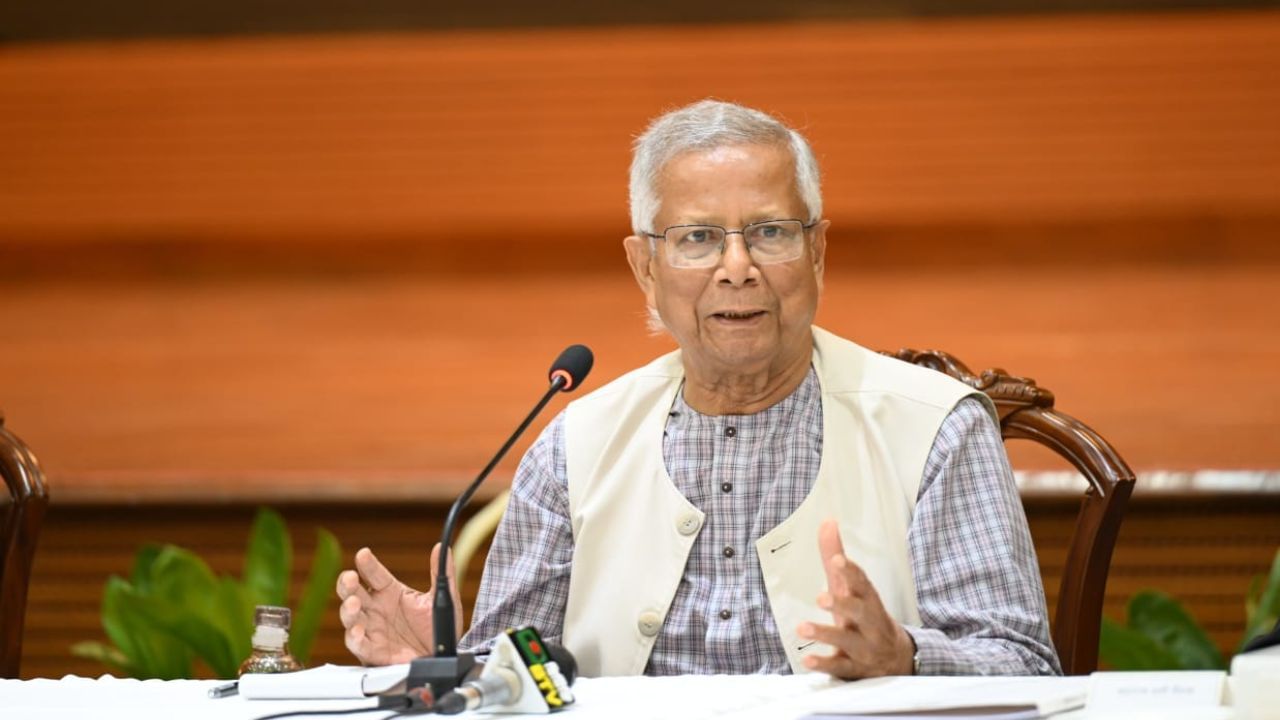
The interim government in Bangladesh has completed a year in office. Despite the upcoming elections, Muhammad Yunus will remain as the chief advisor until February 2026. This period has been marked by substantial shifts in Bangladesh’s foreign policy. The nation has seen significant alterations in relationships with key international partners and a noticeable distancing from India, which had been a close ally during the Awami League’s rule.
While international scrutiny has focused on domestic issues in Bangladesh, the interim government has had success in strengthening relations with important nations. Diplomatic analysts suggest that progress in foreign relations over the last year is due to Muhammad Yunus’s personal influence and positive global image.
Unlike the 2007-08 caretaker government, which saw no bilateral visits, the current administration has facilitated multiple visits to and from Bangladesh by various countries.
Under the previous Sheikh Hasina government, Bangladesh’s foreign policy was significantly oriented toward India. India was not only the country’s biggest trade partner but also maintained limited connections with nations like China and Pakistan, seen as adversaries of India.
The Yunus administration has adjusted this approach, implementing policies viewed as less favorable towards India. Bangladesh has focused on diversifying partnerships over the past year. After the change in leadership, a decrease in medical tourism, student exchanges, and other travel to India has been observed.
From a strategic standpoint, India, China, Japan, Brussels (EU headquarters), and the United States are critical for Bangladesh. Relations with crucial partners have changed significantly in the last year.
China and Pakistan are attempting to capitalize on strained relations between Bangladesh and India. China’s government invited Muhammad Yunus to visit, and they met with the Chinese President in Beijing. Beyond government, China is engaging with various political groups in Bangladesh.
Pakistan has focused on emphasizing shared historical and religious ties between the two countries. Delegations have exchanged visits, and they have initiated efforts to enhance trade and military cooperation.
At the invitation of the Japanese government, Muhammad Yunus visited Japan, where he held talks with the Prime Minister. Japan expressed its commitment to previously agreed-upon deals with Bangladesh but showed no interest in any new, large-scale agreements.
Bangladesh is engaged in continuous dialogue with the European Union. The EU has indicated an interest in sending observers to the upcoming national elections. Additionally, talks continue regarding a Partnership and Cooperation Agreement (PCA) designed to outline future relations. Discussions are anticipated to conclude by the end of this year.
Reports have surfaced suggesting the United States sought a military base from Sheikh Hasina, a request she declined. Some analysts believe the U.S. played a role in the change of leadership. Last year, Yunus met with then-U.S. President Joe Biden.
While relations initially improved, the dynamic shifted after Donald Trump assumed the presidency. Trump imposed tariffs on Bangladesh. Discussions between the two countries continue.
Although the interim government has sought alternatives to its relationship with India, navigating progress without India could present challenges. The world, including India, will be monitoring the democratic elections scheduled for February.