

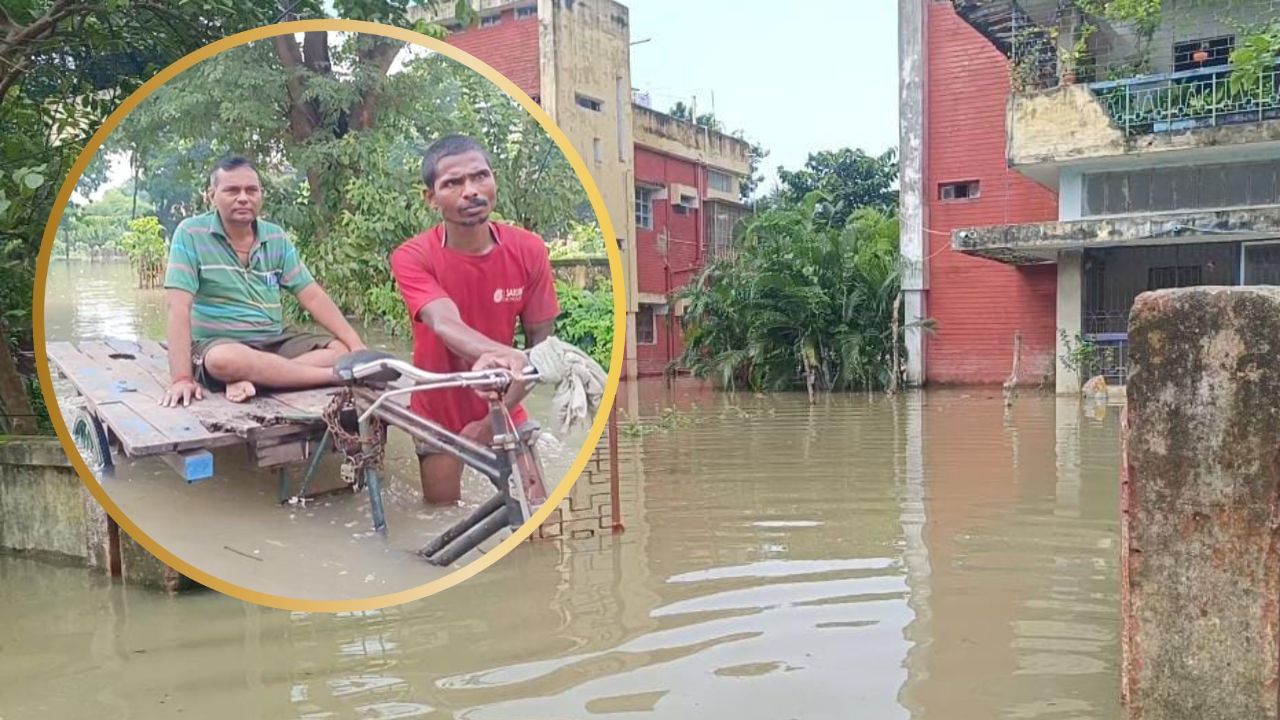
Bhagalpur, Bihar, is grappling with severe flooding as the Ganges River continues to swell, affecting both rural and urban areas. Tilka Manjhi Bhagalpur University (TMBU) is severely impacted. Water has inundated the university’s administrative buildings, senate hall, and Vice-Chancellor’s residence. The Professor Colony is now completely flooded, isolating the professors, teachers, and their families. Numerous residences have been flooded, disrupting everyday life. The PG Women’s Hostel was evacuated, and while the university administration provided immediate support, many faculty members in the Professor Colony are now effectively ‘water prisoners,’ unable to find a safe exit or shelter.
Many families have been compelled to evacuate their homes with what they can carry, relying on temporary transport. People are also using carts for movement, including to access the college and departments. The residents are also worried about the presence of dangerous animals. Concerns about venomous snakes, like Russell’s vipers, are growing, especially with the floodwaters. The potential spread of diseases is also a serious concern. Contaminated water, unsanitary conditions, and mosquitoes are contributing to the increased risk of infections and waterborne illnesses. The disruption of the drinking water supply has further worsened the situation, prompting affected individuals to seek help from the authorities. Rescue operations are underway, but the relentless rise in water levels is making the situation progressively worse.
The ground report reveals the severity of the situation, with professors and their families striving to save their lives and possessions. The flooding is no longer restricted to rural areas but is now impacting higher education institutions and their staff. The Ganges River in Bhagalpur is flowing 40 cm above the danger level, resulting in flooding across urban areas. Professor Sanjay Kumar has shared about the difficulties experienced by residents. Professor Ambika Kumar of the Chemistry Department, trapped with his sick mother, described the challenges of trying to preserve their belongings by elevating them. Women are worried about waterborne diseases, and children are fearful of dangerous animals. Preparing meals has become difficult, compelling people to evacuate by cart as conditions worsen.